In Defense of the Off Switch
Europe’s latest digital rules take aim at infinite scroll and addictive design. After two years living here, I’m starting to appreciate a system willing to leave some money on the table to protect consumers.

Why I’ve grown more sympathetic to Europe’s habit of protecting people from the companies built to optimize them.
“The junk merchant does not sell his product to the consumer, he sells the consumer to his product.”
- William S. Burroughs -
The European Union would like you to stop scrolling for a minute.
Yes, you. Put the phone down. Brussels is speaking and wants your undivided attention.
On November 11, Brussels proposed the Digital Fairness Act, a new package of consumer rules laser-focused on combating the internet's more inventive methods of making people do things they did not originally intend to do from the outset of their cybersurfing adventures.
Dark patterns. Subscription traps. Manipulative pricing. Pseudo “games” engineered to encourage overspending.
And flat-out, dopamine-eating, addictive design…
Under the proposal, digital products currently built in ways that encourage compulsive or excessive use would have to give adults an accessible and viable way to switch off features such as autoplay, uninterrupted content consumption, unsolicited notifications, engagement streaks, and certain prompts from automated systems designed to keep the conversation going.
This is still a proposal, not law.
Infinite scroll is one of the obvious targets that most are all too painfully aware of. The EU is not proposing to ban infinite scroll for adults who want to spend time in their own personal, algorithmic sewer. It does want services to give us a way to switch it off.
I know what most people probably think when they see such a thing. Europe finds a way to regulate everything…
Of course Europe wants to regulate scrolling now too.
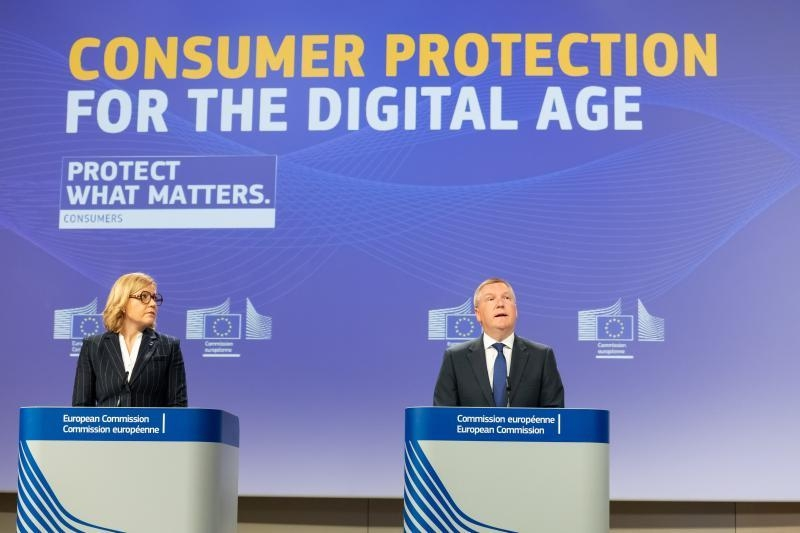
I have had the good fortune of living on the European continent for about two years now, and there are moments when the entire continent feels like it was designed by an extremely conscientious, overbearing helicopter parent.
The tethered plastic bottle cap might be the perfect EU object, and a favorite target of ridicule. lAmericans encounter one on holiday, spend eight seconds wrestling with it, and return home convinced that Brussels has extinguished the flame of human liberty.

These things can feel silly and cause slight inconvenience. In the case of the water bottles… Very slight.
I, for one, do not want to live in a padded regulatory cell where every bad decision has been anticipated and wrapped in foam. Going from living in absolutely chaotic places in Asia to this has made me feel like I’m suffocating at times; I won’t lie.
Adults, for the most part, should retain the right to behave like idiots. It is one of the last pleasures we still have.
But don’t worry, I’ve grown suspicious of this mode of thought now too.
Every so often, Europe produces a rule that initially sounds like another case of bureaucrats inserting themselves between me and a perfectly ordinary object, and then I look at what the rule is actually trying to prevent and think:
Sure.
Maybe the bureaucrats have a point with this one; let’s let’em cook.
The Bottomless Business Model
Infinite scroll is such a stupidly simple invention that it almost feels unfair to blame it or its dastardly architects for anything.
You reach the bottom of the screen, and boom, more stuff magically appears.

That's it.
No sinister red button. No hypnotist. No man in a laboratory coat whispering "engage" into your ear.
Just a never-ending, torrential downpour of cyber clutter searching for your absentminded gaze.
The genius is that the activity never naturally ends. Whereas a newspaper runs out of pages, or a television show ends, this seemingly has no clean start or finish. The feed simply produces another thing. And another. And another. Rinse and repeat.
And it ain’t easy to imagine a more perfect interface for the economics behind it.
If another minute of my attention has value, there is no commercial reason to prefer forty minutes to forty-one.
If opening the app seven times today is valuable, eight visits are obviously better.
If a notification brings me back, send one. Or two.
If autoplay means I consume another video before making a conscious decision about whether I wanted another video, for God’s sake, autoplay it already!
If removing a stopping point increases engagement, remove that infernal, good-for-nothing stopping point.
Nobody involved has to be evil. I’m noticing a common theme in these pieces: our systems don’t have to have bad intentions.
I work in venture capital. I invest in companies. I clearly want portfolio founders to succeed, businesses to grow, useful products to spread, and the companies I support to make money.
In my career, I have needed to develop a deep understanding of marketing and growth, so I know why people care about retention, conversion, churn, lifetime value, session length, and all the other little numbers through which modern companies attempt to convert human behavior into a sterile, convenient dashboard.
Those numbers matter, but they have neither a conscience nor a moral compass to guide them.
Retention will never know whether somebody is happier or better off than they were before, nor will engagement tell us, or anyone else, for that matter, if an hour online was time well spent.
And I can definitely assure you that revenue has never once looked at a customer and decided they have enough already; let’s leave them be!
When left to its own devices, that’s sort of how unrestrained capitalism works. The machine only knows whether the number went up, and it forever hungers for more.
Which brings me back to my obsession of the week: infinite scroll! There are layers here; keep up.
The feed has no bottom because the economic logic behind it has no bottom either.
There is always another minute to capture, another subscription to sell, another piece of information to pry away from a user, another purchase to gently nudge along, or another tiny percentage of human behavior that can be optimized into something commercially useful.
That’s what happens when you build an interface without a stopping point inside an economic system that does not in the slightest believe in stopping points. In fact, we hire experts to remove these friction points and analyze the raw data to ensure we increase and optimize everything we possibly can at any and all cost.
You can blame people like me for this system. I don’t love taking credit for helping it along, but here I am claiming my small bit of guilty real estate.
The tech industry has spent decades celebrating the companies that figured out how to grow faster, retain more people, capture more market share, increase usage, lower friction, and scale to somewhere beyond the visible horizon.
Usually we refer to this as success.
And sometimes it is.
But other times, the number keeps going up because we have gotten extremely good at taking something from people, often to their extreme detriment.
Whose Freedom Are We Protecting?
The standard complaint about regulation is that it restricts freedom.
Can’t disagree there.
That is what regulation does. It’s sort of the point.
The peculiar part is deciding whose freedom gets restricted in that particular instance.
A company wants the freedom to make cancelling a subscription sufficiently irritating, like a devastatingly futile labyrinth of a cancellation process. The customer just wants the freedom to leave.
An app or platform wants the freedom to design its product around maximizing attention. The person holding the phone might prefer to retain some authority over where that attention goes. And we do still retain that agency, but it would come as no surprise that most people struggle with this.
Manufacturers would rather control how their products are repaired, which parts are available, and when somebody finally gives up and buys another device. The owner may have the quaint idea that buying something means owning it, and the right to repair it as they see fit.
We normally get hung up on the first set of freedoms as economic freedom and the second as consumer protection, as though one were philosophically noble and the other a tedious administrative concern.
I am not sure why, but I have a sneaking suspicion money is involved.
Sometimes preserving individual freedom requires limiting corporate freedom.
That distinction has become much clearer to me since moving to Europe.
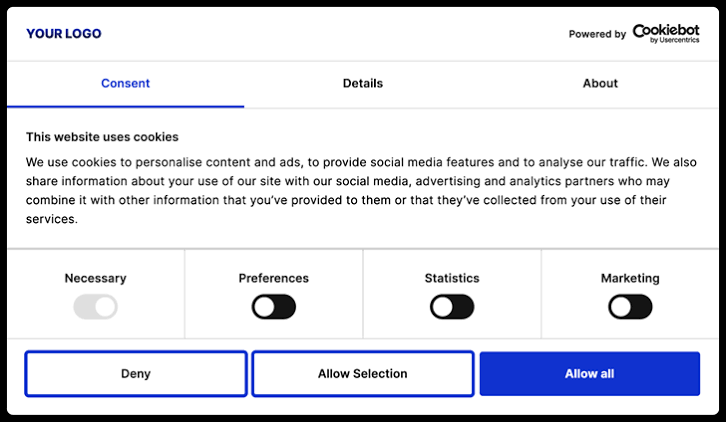
European regulators have certainly found ways to make privacy irritating. That’s evident in the constant website cookies and data management I need to suffer. The internet now presents Europeans with so many consent boxes that declining cookies can feel like applying for a mortgage.
There is bureaucracy here that deserves to be fed directly into a wood chipper. I won’t pretend everything is perfect here.
But beneath that tedious, infuriating paperwork is an instinct I have slowly warmed up to.
The person on the receiving end of the business model should have somebody on their side, which sounds painfully obvious until protecting that person suddenly costs somebody else money.
Privacy protections can and do make advertising less efficient. Easy cancellation can increase churn. Right-to-repair rules can weaken lucrative hardware ecosystems. Restrictions on engagement mechanics can reduce engagement.
Consumer protection becomes expensive precisely when it starts protecting consumers from something profitable. Something that directly combats the lucrative business model.
This is where it becomes tricky to figure out what the correct balance is.
Europe has some economic problems. There is no reason to pretend otherwise.
The continent has struggled to produce and retain technology companies at the scale of the United States. An ECB speech this year, citing European Investment Bank research, noted that close to 30 percent of European-founded unicorns between 2008 and 2021 moved their headquarters abroad, mostly to the United States. It ain’t hard to imagine why they may have done that either…
Founders and executives who relocated cited access to capital, larger unified markets, and regulatory simplicity among the attractions.
Regulation is not solely responsible for that, although it does play an outsized role. Europe's fragmented markets and thinner pools of growth capital matter enormously too.
Still, some founders and investors will look at the regulatory pile accumulating in Europe and conclude that America is simply easier. Especially when certain “business-friendly” pillars of corruption are operating the country like a riverboat casino.
Well, the founders may be right to move there. It is a founder’s mission to exhaust all options and explore every possible move to increase the company’s value.
I really want Europe to make it easier to build companies. I think there is enormous potential here. I would like the continent to produce more technology, more startups, more competition, more ambitious founders, and fewer 400-page documents explaining which checkbox needs to appear beside another checkbox. Oh, and reduce dependence on other countries (and volatile allies).
And yet, I still feel torn. I find something admirable in a place willing to leave some money on the table.
There are much worse things than an economy deciding that maximum extraction is not the objective. I’m sure many would disagree on that point.
Ship Now, Ask Later
The part that bothers me most about our relationship with technology is how often the experiment happens before the question.
A new product arrives that is faster, shinier, better connected, more personalized, automated, frictionless, intelligent, or simply new enough to make everything preceding it look vaguely prehistoric.
We deploy and scale it.
It isn’t until years later somebody asks what it actually did to us.
Norway has been upgrading its educational technology for the last decade, and digitizing its schools. Screens and tablets, and all sorts of individual devices, became deeply embedded in classrooms, particularly among younger students.

Now the government is reversing course and pulling parts of that experiment backward.
Norway has committed more than NOK 500 million to physical textbooks, changed its curriculum so digital devices should be used especially cautiously in grades one through four, pushed phones out of classrooms, and proposed guaranteeing access to printed learning materials. Its government is now doing something extremely rare and admitting it was wrong, openly saying screens were given too large a role in Norwegian schools.
That does not neatly prove that tablets caused every decline in Norwegian educational performance. The Norwegian government itself is making a policy judgment amid a much more complicated educational picture.
But it’s a fascinating development.
The technology arrived carrying the aura of progress, but caution and concern took years to show up afterwards.
We treat nearly all digital technology this way, which is sort of a departure from how things normally did and should operate.
Put tech into classrooms, homes, pockets, bedrooms, workplaces, friendships, childhoods, marriages, elections, and whatever remaining corners of life have not yet acquired a login screen.
Then collect all the evidence.
I am not arguing that every app should undergo ten years of clinical trials before appearing in the App Store. Nothing would exist if that were the case. Innovation would grind to a halt, and most digital products are obviously not pharmaceuticals with obvious life-or-death implications.
But the opposite presumption is exceptionally strange too, isn’t it?
"We haven't proved this is harmful yet" has become an extraordinarily useful sentence when millions of people are already using the product.
Australia has taken a more aggressive approach. Since December 2025, certain social media platforms have been required to take reasonable steps to prevent Australians under sixteen from holding accounts. The burden falls on the platforms, not children or their parents.
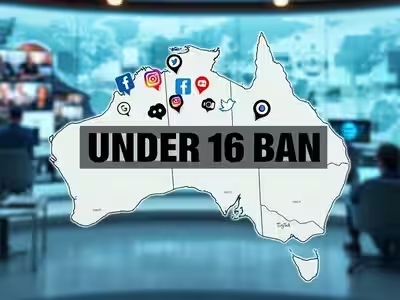
Other folks' nanny-state alarms might be ringing out of control right now, hearing that.
A government telling adults they should be able to turn off infinite scroll is one thing. Preventing a fifteen-year-old from maintaining an Instagram account raises harder questions about autonomy, privacy, enforcement, social isolation, and whether sixteen is the right line.
I am not convinced every protective intervention is wise simply because somebody invokes children.
But I understand the instinct. Especially in this case.
Maybe we should occasionally err on the side of caution before another generation spends ten years inside the experiment.
The difficult part is figuring out the right amount of intervention.
Enough Is Not a Market Signal
I reluctantly believe in capitalism. There is no better system that I’m aware of (yet).
That probably does not need much explanation from somebody who works in venture capital.
Capitalism has produced staggering abundance, useful technology, medicines, infrastructure, entertainment, businesses, jobs, and products that would have looked like black magic to people not very far removed from us.
But none of that means the market knows when enough is enough.
That is not what it is built to determine.
If collecting more data is profitable, there is an incentive to collect more data. If another hour of attention creates more revenue, there is an incentive to capture another hour.
There is no singular moment when the spreadsheet leans back from the table and announces that everyone has made plenty of money and perhaps the customer should be left alone now.
The stopping point usually comes from somewhere else.
Competition can provide a natural stopping point. Reputational risk can provide another. Consumers can rebel, or social norms can change.
But sometimes it’s the government recognizing that it needs to step in and draw a line.
I think that last option makes people uncomfortable because it forces a value judgment into something we prefer to describe as neutral economics.
Protecting privacy reduces advertising revenue. Making products repairable reduces replacement sales.
Preventing companies from using certain engagement tricks normally reduces total time spent on their platforms.
Making cancellation easier can increase churn.
Those are not accidental, hidden costs. They are merely the price of deciding that some interests should matter more than maximizing the commercial outcome. Insane, I know!
There is a temptation, particularly around technology, to assume that whatever survives the market has somehow earned moral legitimacy along with economic legitimacy. I see it all the time, but I don’t buy it.
A profitable system can and often does make people's lives worse.
Rising metrics can be deceiving, and a wildly successful product can be exploiting weaknesses in its users.
Capitalism needs boundaries because profit is an incentive, not an ethical test.
The argument over the Digital Fairness Act is therefore much bigger than whether infinite scroll is irritating.
It is about where we put the presumption.
Should companies generally be permitted to push a technology until we can demonstrate sufficient harm?
Or should the people introducing powerful new methods of influencing behavior bear more responsibility for showing that the thing they are deploying at enormous scale is not damaging the people on the other side?
Unfortunately, there is no neat formula for such an endeavor.
I tend to distrust governments, or any entities, for that matter, when they have too much power. I dislike nanny-state thinking. Regulators can be slow, politically motivated, technologically illiterate, captured by incumbents, or simply wrong. Rules designed to restrain a trillion-dollar corporation can easily become a moat protecting it from the smaller competitors that cannot afford forty lawyers.
Europe needs to remember that. Always.
But if I have to choose which side to err on when corporate incentives and human welfare are pulling against each other, I know where I stand.
Start with the human being.
Make the corporation explain why taking more is necessary. Accept that protecting people will sometimes cost money. Accept that a company may decide America is easier.
Accept that a little potential GDP may be sacrificed because not every profitable activity improves the place where the profit was made.
That calculation used to make me much more uncomfortable than it does today.
Two years in Europe will apparently do strange things to an American investor.
I’m committed to the startup scene here, and I still want Europe to build more companies.
And believe me, I still reserve the right to complain when a bureaucrat decides to protect me from something I was perfectly capable of handling myself.
But Brussels wants to put a stopping point inside the bottomless feed, and on this, along with things like the right-to-repair, I find myself hoping they succeed.
Because I have spent enough time around markets to know they are damn good at probing around, searching for gaps and blind spots, and exploiting whatever we forgot to prohibit.
I’ve worked around technology long enough to know we usually discover the consequences well after adoption.
And I have also spent enough time scrolling to know that the current thing always looks important until the next one appears.
Neither our feeds nor the market will ever be capable of telling us when we’ve truly had enough.
The feed has no bottom because the market behind it has no reason to build one.
There will always be another minute to capture, another habit to monetize, another tiny piece of us worth turning into revenue.
Somebody eventually has to say enough is enough.
God help me, I am beginning to think Brussels might be useful after all.