The Great Digital Jailbreak
AI-assisted programmers are rebuilding software, resurrecting games, and rattling the gates of digital capitalism. The corporations may have created the very technology that threatens their own business models.


“Your legal concepts of property, expression, identity, movement, and context do not apply to us.”
- John Perry Barlow, A Declaration of the Independence of Cyberspace -
The copyright lawyers have lost control of the zoo...
You may not be aware just yet, but something wonderfully peculiar is happening on the internet.
Master Chief has wandered into the radioactive wasteland of Fallout: New Vegas. Mario and Luigi are racing go-karts with Lara Croft and Pikachu. Tony Hawk can now be found ripping around World of Warcraft’s Azeroth on his skateboard.
In a nutshell, people are now using rapidly evolving artificial intelligence models to Frankenstein-cobble together video games that were never meant to meet; in another dusty, dank corner of the World Wide Web, a disgruntled software developer has gone ahead and decided that Adobe's entire business deserves a homemade competitor.
There is something magnificently deranged about this whole spectacle.
Decades of expensive software development, fiercely protected intellectual property, carefully cultivated brands, and meticulously constructed corporate ecosystems are being subjected to the whims of AI-enabled vibecoder communities who apparently looked at the modern entertainment and software industries and postulated that the whole space could use a facelift.
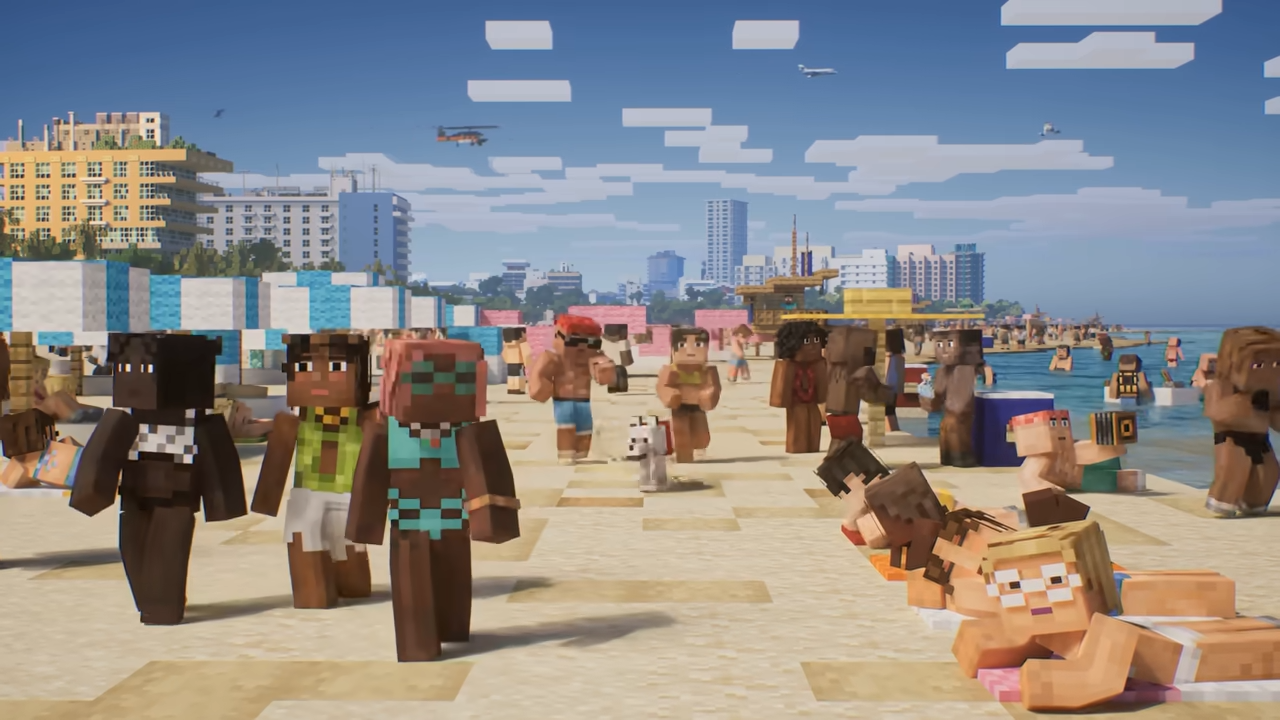
One developer has managed to bring Minecraft into Grand Theft Auto V, with the two games running together and interacting. Master Chief's excursion through the fantastical world of Skyrim is still a work in progress, but the footage alone looks like someone neglected to close a pesky, interdimensional portal.
These are indeed strange times for fictional characters, and those of us who love them. Imagine spending twenty years building an iconic video game franchise only to discover your protagonist has wandered off to partner up with the competition.
Source: Youtube
And while all these beloved characters are being dragged through the digital equivalent of a back-alley genetic engineering laboratory, something a bit more consequential may be happening behind the scenes…
People are beginning to experiment with rebuilding the software, games, and entertainment experiences that enormous corporations have spent eons learning how to gate, control, and ruthlessly monetize.
Take Brandon Thomas, a software engineer who reportedly became so irritated with Adobe's clunky subscriptions and predatory cancellation fees that he decided to build his way around it…
Most people confronted with an annoying software bill will complain, threaten to cancel, forget about it, and repeat the ceremony twelve months later. I know I have had this particular battle with a number of software providers before. Well, our friend Brandon has taken a different approach.
Using Anthropic's Claude, he helped create ArtCraft, a collection of free, open-source alternatives to Photoshop, Premiere Pro, Lightroom, Illustrator, and several other Adobe products.
The programs have names like PhotoCraft, FilmCraft, and LightCraft, which suggests the marketing department consists of one exhausted engineer, an LLM, and a thesaurus.
They're also unfinished, missing essential features and requiring substantial development before professionals could reasonably abandon Adobe. Nobody should be rushing to entrust their entire livelihood to software that is still finding its feet.
But the existence of these projects is remarkable enough to warrant writing this right here, right now.
For decades, challenging a mature software giant meant assembling a formidable engineering team, raising substantial capital, and spending years developing products, all while convincing customers to abandon the flawed but familiar tools they'd learned to tolerate.
Now that colossal moat is beginning to resemble a dried-up birdbath. AI coding assistants allow far smaller operations to attempt projects that once required enormous resources. Especially reverse-engineering the IP of others.
Whether these experiments can mature into dependable professional tools is another matter entirely, but the people building them seem determined to find out.
I will say that the ability to attempt it doesn't necessarily guarantee success.
Maintaining reliable software is an entirely different engineering challenge from generating an impressive demonstration. Still, we are beginning to witness a cataclysmic sea change that will shake the very economic landscape to its core. And the developers working on these “projects” seem determined to find out just how far the new tools can take them.
Which brings us back to the oh-so-lovable Adobe.
Just this year in March, the company agreed to a proposed $150 million settlement with the US government over allegations concerning subscription disclosures, early termination fees, and shady cancellation practices. The proposed agreement included $75 million in civil penalties and $75 million in free services for customers they had wronged.
Well, Adobe still maintains that it committed no wrongdoing. But the payments and penalties sure say otherwise.
The allegation is that customers were being made to jump through unnecessary hoops and navigate labyrinths to stop paying for software that was familiar to anyone who has ever attempted to escape the greedy clutches of a subscription service.
There's a special kind of indignity involved in having to negotiate your departure from a product you no longer want. The polite reminders, the shameless limited-time offers, the incessant questions begging for an explanation for why you're leaving their tender, loving embrace behind. Occasionally there's a little financial punishment waiting at the exit, like a hotel charging guests for having the audacity to check out when they must inevitably return home.
It's an extraordinary feat of modern commerce that canceling a subscription can sometimes feel more consequential than taking out a mortgage for your dream home.
And Adobe is hardly alone in this. Not by a long shot.
The Fine Art of Renting Everything
Somewhere along the way, the tech industry developed a compulsion to convert its products into a nuanced financial relationship:
- Software that once arrived in a substantial box with a serial number shifted into something you infinitely rented
- Video games became purely digital licenses tied to accounts and online services
- Features that once came included in a purchase became premium upgrades, gated behind recurring payments and elaborate membership tiers
The modern consumer has acquired the financial responsibilities of a small medieval estate, complete with recurring obligations to a coterie of distant techno-landlords.
Of course, subscriptions themselves weren’t some terrible invention. Software is known to need updates from time to time. Servers cost money. Compute credits are needed for the onslaught of AI applications and AI-integrated software.
Not every product makes sense as a one-time purchase. Despite feeling like I’m dying slowly, experiencing a death by a thousand paper cuts, the subscription model makes sense in some cases.
While I could happily (or unhappily) whinge and moan all day about the subscription economy, there is another more menacing trend lurking behind it:
We seem to have all agreed to give up owning things.
What is it the WEF likes to say?
"You'll own nothing and be happy"
It came from a speculative vision of 2030, rather than an official manifesto.
Judging by the subscription economy, however, some companies appear to have mistaken it for a business plan.
And it appears the entertainment industry has become too enthusiastic about this plan.
Music collections have migrated from shelves and hard drives to Spotify subscriptions. Films once bought on DVD now live inside streaming libraries on Netflix or one of the myriad other platforms.
Of course, you can still buy records, Blu-rays, DRM-free downloads, and all manner of physical media. But it’s much less common. The commercial momentum is forging on ahead toward access over possession…
We pay for the privilege of enjoying a vast digital collection without any damn say in what remains inside it.
I miss the reassurance of owning a terrible, heavily scratched movie on DVD. It could be an embarrassment to your entire collection, but at least it was YOUR embarrassment.
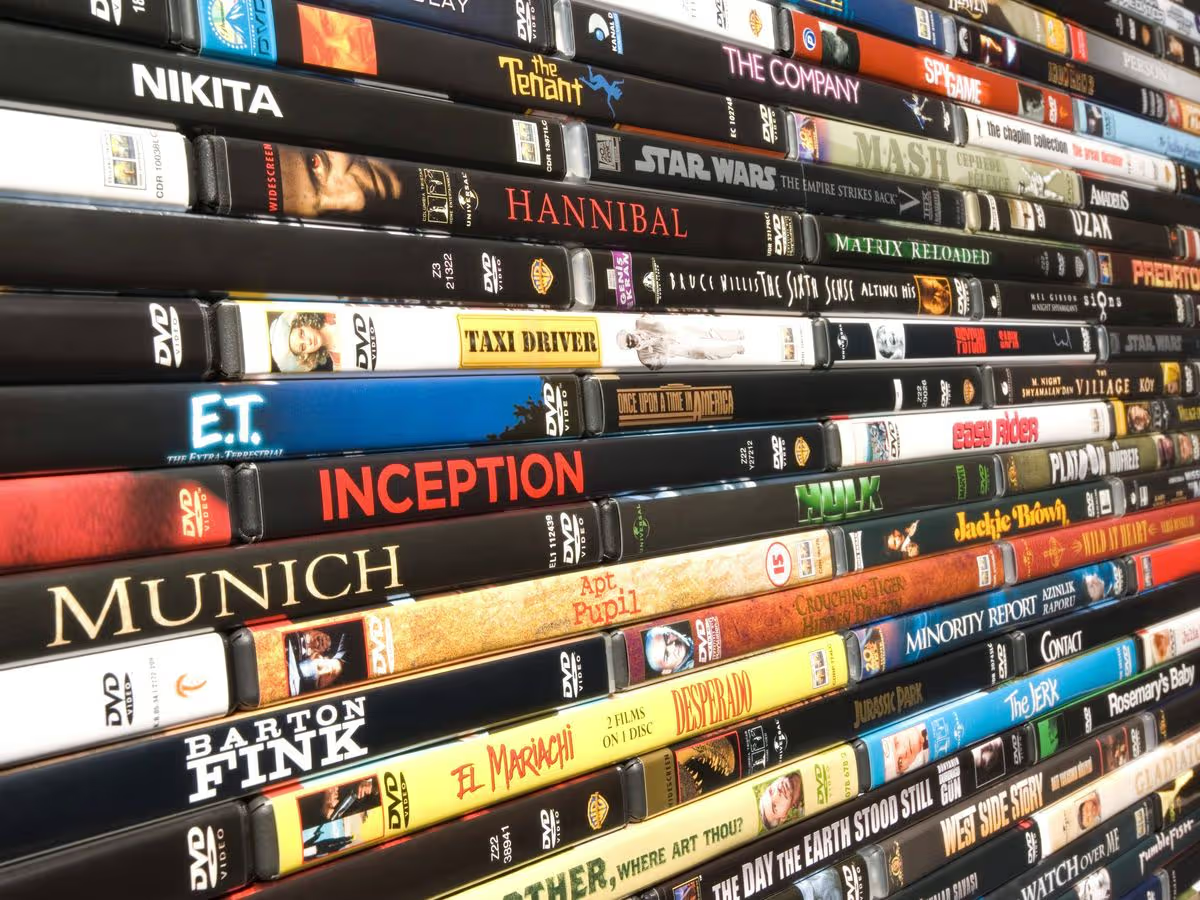
Even Sony, the company that helped make PlayStation discs a fixture of living rooms around the world, announced in July 2026 that it would stop producing physical discs for newly released PlayStation games starting in January 2028. Previously released discs will remain supported, but the future of new PlayStation games is officially digital-only.
And just to make the announcement particularly charming, Sony also twisted the knife by announcing the phased closure of the PlayStation Store on PS3 and PS Vita on the very same day.
Previously purchased games will remain downloadable for the foreseeable future, according to Sony. How reassuringly indefinite. However long they let that last.
One announcement explained why consumers would no longer be able to buy newly released games on discs. The other reminded everyone that digital storefronts have expiration dates.
To be fair, physical media obviously doesn't guarantee permanent access either. A disc that requires authentication or a publisher-operated server can become a very expensive coaster when those services vanish.
Isn’t that disturbing? What exactly did we buy if the continued existence of our purchase depends on the commercial interests of whoever sold it?
This isn't some hypothetical dystopia cooked up by a paranoid man living off-grid beneath a tin-foil roof. Games have already become unplayable following server shutdowns, inspiring the Stop Killing Games initiative, which gathered over a million verified signatures in the European Union.
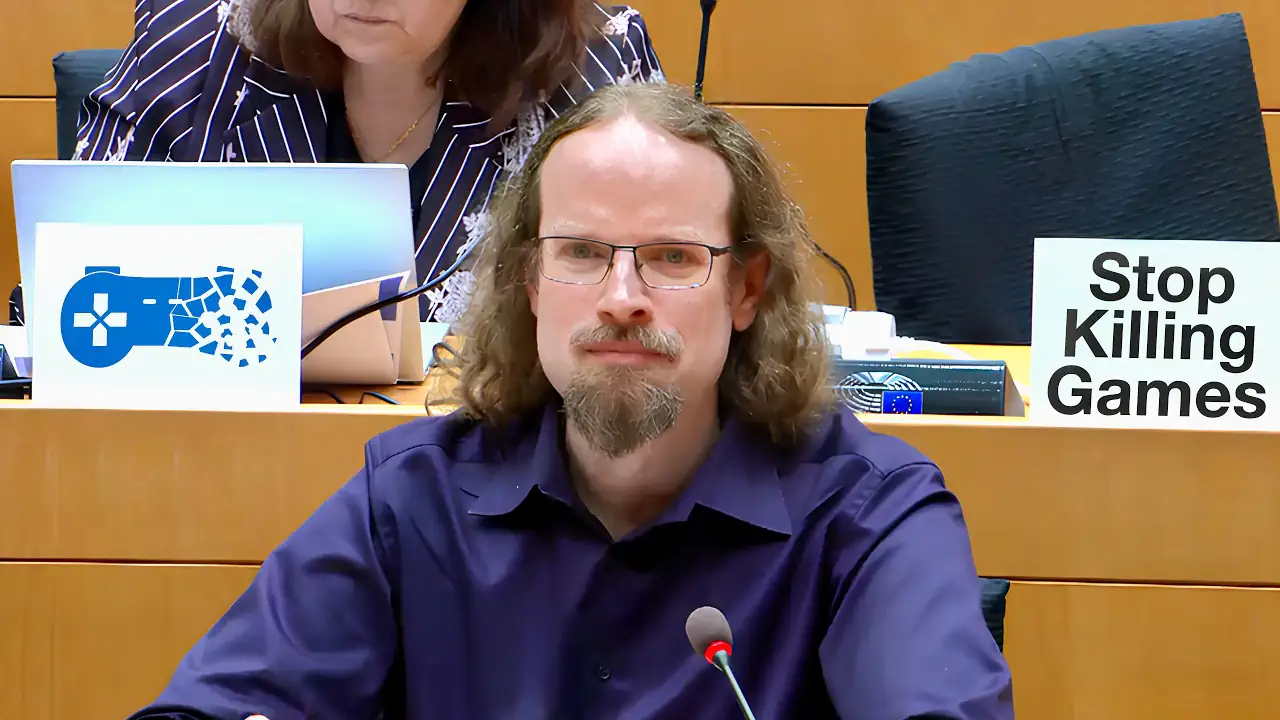
The campaign argues that publishers should have responsibilities to preserve the playability of games after commercial support ends. In June 2026, the European Commission declined to propose new legislation at that stage, instead committing to further engagement with industry and consumer representatives.
A civilization capable of producing photorealistic dragons, simulated universes, and artificially intelligent machines is still struggling to determine whether someone ought to be able to play a video game they purchased.
The technological achievement is impressive. The rest of it surrounding? Not so much.
The Machines Discover Lockpicking
And now the machines might be coming to rearrange the furniture. And not in the way we usually talk about at Gonzo Capital.
AI-assisted programming is making some previously formidable development tasks more approachable. People are experimenting with running software on hardware it was never intended for, translating programs between platforms, reconstructing lost functionality, and modifying games in ways that would have required extraordinary technical expertise, time, and resources.
Projects like AnyPS5 are attempting to make PlayStation 5 executables run on ordinary computers. The project remains experimental, requires appropriate game files, and is nowhere near offering universal compatibility just yet. Nobody has magically recreated Sony's entire ecosystem for free.
But that's the remarkable part of these experiments. They're still primitive, sometimes barely functional, and occasionally held together by little more than stubbornness and a worrying amount of Adderall and caffeine. Yet they suggest that some of the barriers separating consumers from the software they love could become less formidable.
Open-source developers and modders have been doing this kind of work for decades, of course. Entire communities exist to lovingly add content to their favorite games and show off their coding chops and creativity. Blender, GIMP, emulators, fan modifications, and fanbases devoted to digital preservation existed long before anyone started asking chatbots to write code.
What AI may do is bring more people into those communities, increase their productivity, and make certain projects economically feasible that at one point in time seemed absurd. The tech is there, and so is the motivation.
For companies whose competitive advantages depend partly on customers having few credible alternatives, that presents a nasty problem for the incumbents.
If recreating useful software becomes dramatically cheaper, what exactly are customers going to be paying for?
Reliability, support, and continued innovation remain excellent answers. Being the only company capable of making something will cease to exist as a reason, however.
And this is where I have somewhat of an inconvenient confession.
I've spent an indecently significant chunk of my career helping companies build businesses, advising founders, and thinking about how to turn promising products into profitable operations. Along the way, I've recommended plenty of business models that I personally dislike, or in some cases loathe, as a consumer.
Subscriptions. Freemium plans. Retention strategies. Discount email loops sent to people who attempt to cancel, in the hope that a sufficiently attractive and arbitrary offer might persuade them to remain on the party bus.
I've been on the receiving end of these tactics and found them irritating, to put it mildly. My annoying business brain also tends to understand exactly why companies use them.
Recurring revenue makes businesses more predictable. The same can be said for donations to nonprofits.
A customer who stays for another twelve months is worth far more than one who leaves tomorrow. Freemium can help acquire users, retention campaigns can recover otherwise lost revenue, and investors tend to appreciate businesses that can demonstrate some control over their future cash flows.
These aren't necessarily inherently predatory practices. Some create genuine value, and sometimes a customer is delighted to receive a discount rather than lose access to a product. The distinction between earning loyalty and exploiting customer inertia matters.
But I knew I disliked certain experiences as a consumer, and I still recommended the underlying strategies because I wanted the companies I worked with to have a fighting chance.
If you can't beat them, reluctantly join them.
It's not the most inspiring business philosophy ever devised, but it has the advantage of being useful when payroll is approaching.
The problem is that millions of reasonable commercial decisions following best business practices can produce a nightmarish hellscape for consumers.
Founders want to keep the lights on. Investors pressure those same founders for dependable returns. The overworked marketing team wants to reduce churn, and hey, the competitors are already doing it too. Not following suit could mean death.
What that leads to in many cases is a collection of miniature toll roads with payment booths installed at every conceivable intersection, like the world’s most maddening game of Monopoly.
And this needn’t be some grand conspiracy with collusion and backroom deals. It’s a product of relentless, unending optimizing. I think that’s what makes the advent of LLMs and AI quite amusing.
How deliciously ironic it all starts to seem.
There is something almost biblical about the predicament, a delightful little serving of divine retribution for an industry that has spent decades perfecting the art of punishing customers and weaponizing their dependency.
The software business cultivated a world of subscriptions, licenses, proprietary formats, and expensive barriers to entry. Then the technology industry poured an obscene amount of money into artificial intelligence, which now threatens to undermine some of those very same barriers.
The machine is beginning to chew on its master's furniture.
That tasty irony becomes even more delicious when you consider just how many people regard AI as an unmitigated disaster. You've probably encountered the AI doomers, the pessimists, the profoundly unimpressed, and the Luddites who would rather go back to communicating via carrier pigeon than touch another chatbot.
Some believe AI threatens human creativity and employment. Others worry about the extraordinary concentration of corporate power, the erosion of privacy, and the prospect of machines becoming clever enough to make their creators redundant.
Some of the fears are unreasonably reasonable. I've expressed several myself in this here blog, and I'm hardly ready to hand over the keys to civilization to a glorified autocomplete engine.
But imagine the indignity of discovering that the very technology you've spent years denouncing might also help people escape the commercial arrangements you've spent years resenting.
Imagine someone who despises AI using an AI-assisted, open-source alternative to escape Adobe's subscription fees. Or a gamer furious about generative AI discovering that AI-assisted preservation projects might help keep their favorite childhood games alive long after the publishers have lost interest.
Could this much-maligned technology actually help dismantle some of capitalism's more predatory business models?
The possibility is wonderfully absurd.
Joseph Schumpeter famously described creative destruction as an essential feature of capitalism in Capitalism, Socialism and Democracy. Businesses innovate, displace older systems, and eventually find themselves threatened by the next generation of innovations.
He probably wasn't imagining Mario running around with an alien plasma rifle, but the principle still applies.
Source: Youtube
And we’re now beginning to see bits and pieces of evidence that some incumbents now recognize the opportunity.
On October 13, Microsoft announced Xbox Labs, an initiative exploring emerging possibilities in game development, compatibility, and remixing. Its announcement explicitly recognized that these developments could challenge Microsoft's existing business models.
This is an intriguing response. Rather than immediately treating every technological experiment as an invading army, one of the largest gaming companies in the world is exploring whether the apparent disorder might produce something valuable.
Of course, Microsoft is hardly abandoning its intellectual property or opening every locked door. It still has an empire to run.
But there's something telling about the announcement. The changes have become interesting enough that even the people who own the kingdoms want to investigate what those savage barbarians are building outside the safety of the city gates.
For consumers, this could be enormously beneficial. More competition, cheaper tools, better compatibility, and greater opportunities to preserve or modify software we should already own.
Who Pays for the Jailbreak?
For indie creators, however, the celebration is a bit tricky…
It's one thing to cheer when a giant corporation loses some control over its customers. It's another when the same technology threatens the livelihoods of the very people whose creativity made those industries worth anything in the first place.
I've written about this before in Music for People Who Aren't Listening, where I explored the peculiar rise of Suno and the prospect of machines producing commercial music without much need for the pesky human musicians who made the technology possible.
Having spent years of my life playing music myself, I find the whole affair deeply unsettling.
The same issue applies to illustrators, writers, comedians, filmmakers, and countless other creative professionals whose work can be imitated or displaced by systems trained on human culture.
Now imagine an independent illustrator who finally escapes Adobe's subscriptions through a free, AI-assisted alternative to Photoshop, only to discover that the same technological ecosystem has helped her clients replace her with synthetic imitations of the work she spent twenty years learning to produce.
Liberation!
This is where I think the critics of AI deserve to be taken more seriously. The technology can genuinely expand access to creative tools, particularly for people excluded by money, training, geography, or disability. But the ability to generate enormous quantities of cheap material can also make it more difficult for original work to command attention or a reasonable price.
There's a meaningful distinction between building an independently developed alternative to an expensive piece of software and copying somebody else's protected creative work. Recreating useful functionality, making compatible programs, preserving abandoned games, and appropriating copyrighted expression involve different activities and legal considerations.
And the distinctions don't disappear just because the results are free.
A small independent game studio deserves meaningful protection for its creations, just as a musician deserves a fair opportunity to earn a living from music. Being a giant corporation doesn't automatically invalidate intellectual property rights either, even when some of its commercial behavior deserves a good kicking.
The challenge is figuring out where those protections encourage creativity and where they begin preventing other people from creating something new.
Lawrence Lessig and other advocates of a freer digital culture were asking versions of this question long before artificial intelligence became capable of generating entire albums, writing software, and producing video game abominations.
Now the question has developed ferocious little, pointy teeth.
But when a machine makes creation cheaper, somebody benefits from that reduction in cost. Somebody else might be the cost being reduced.
It would be wonderful if the ultimate result were a flourishing ecosystem of affordable creative software, independent developers, restored games, thriving artists, and consumers with genuine control over what they purchase.
But before we go ahead and organize that festive victory parade, there's one rather scary creature still wandering around the zoo.
The AI companies!
Many of the tools helping people escape established software businesses are themselves products of extraordinarily expensive infrastructure, concentrated capital, proprietary models, and recurring subscription fees.
Marc Andreessen of a16z famously claims that “software is eating the world”. Well, now it appears that AI is eating the software that is eating the world.
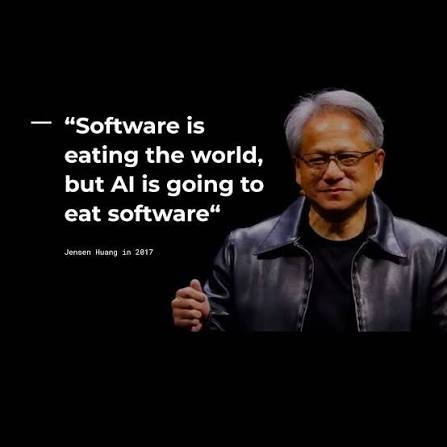
And replacing a collection of pesky software subscriptions with a dependency on a handful of AI platforms doesn't necessarily constitute liberation. It may simply mean the next generation of landlords has arrived with more powerful computers, and a more defensible moat complete with impossible-to-scale walls and vicious crocodiles.
Open-weight models, local computing, and community-owned infrastructure offer some possible, viable alternatives, but building and maintaining sophisticated AI systems still demands insane amounts of resources. The economic incentives that shaped the previous generation of software companies haven't disappeared.
And then there's the fate awaiting any successful open-source challenger like ArtCraft.
Suppose a scrappy group of developers builds a genuinely excellent alternative to a major commercial software product. People adore it. The project attracts lots of attention, contributors, and legions of enthusiastic users overjoyed by the prospect of not having to pay Adobe anymore.
Eventually, somebody has to maintain the thing. Security vulnerabilities need patching. Users demand support. Compatibility problems multiply and compound. ArtCraft users have already begun to run into some of these compatibility issues in the short time it's been live.
The founding team needs money, and the servers are not particularly interested in revolutionary ideals.
Sure, donations could be enough. Perhaps companies pay for support, foundations provide funding, or contributors sustain it through volunteer work. Open source has demonstrated plenty of ways to survive without the conventional software licensing model.
But there will also be projects where somebody decides that a commercial subscription is the most sensible structure.
And I know exactly what happens next.
The developers will gather around a spreadsheet and start discussing recurring revenue. Someone will suggest a free tier to attract users. Another person will propose annual plans with a discount, and eventually somebody will bring up the importance of retaining customers who threaten to cancel.
I can practically hear the conversation. I’ve had it a thousand times at this point.
Worse, I might find myself agreeing with them.
That is the maddening thing about all this. I want AI to help people escape restrictive software ecosystems, resurrect forgotten games, and give talented outsiders a fighting chance against enormous corporations. Those building the alternatives should be able to earn a decent living, just as artists deserve meaningful rights over their work and consumers over their purchases.
Controversial, I know.
Those desires aren't inherently incompatible, but nobody has yet cooked up a business model that reconciles those competing interests. Not that I’m aware of, at least.
Maybe the most important question surrounding AI has less to do with how much software it can recreate and more to do with how much control it can return to ordinary people, without destroying the livelihoods of the people who make the things we value.
The machines have certainly opened some pretty strange doors. Whether we end up with a freer digital culture or simply a different collection of gatekeepers remains to be seen.
For now, the copyright lawyers have lost control of the zoo. The animals are breeding, the fences have developed all sorts of suspicious holes, and some majestic creatures are escaping back into the vast and untamed wilderness.
I wish them well!
Although I suspect that sooner or later, some rhino or hippopotamus or condor is going to ask me how to monetize.
And the worst part is that I'll probably have a few suggestions for'em.