Why Does Everything Have to Scale?
I make a living investing in companies that need to become enormous. I’m not convinced everything else should have to do the same.

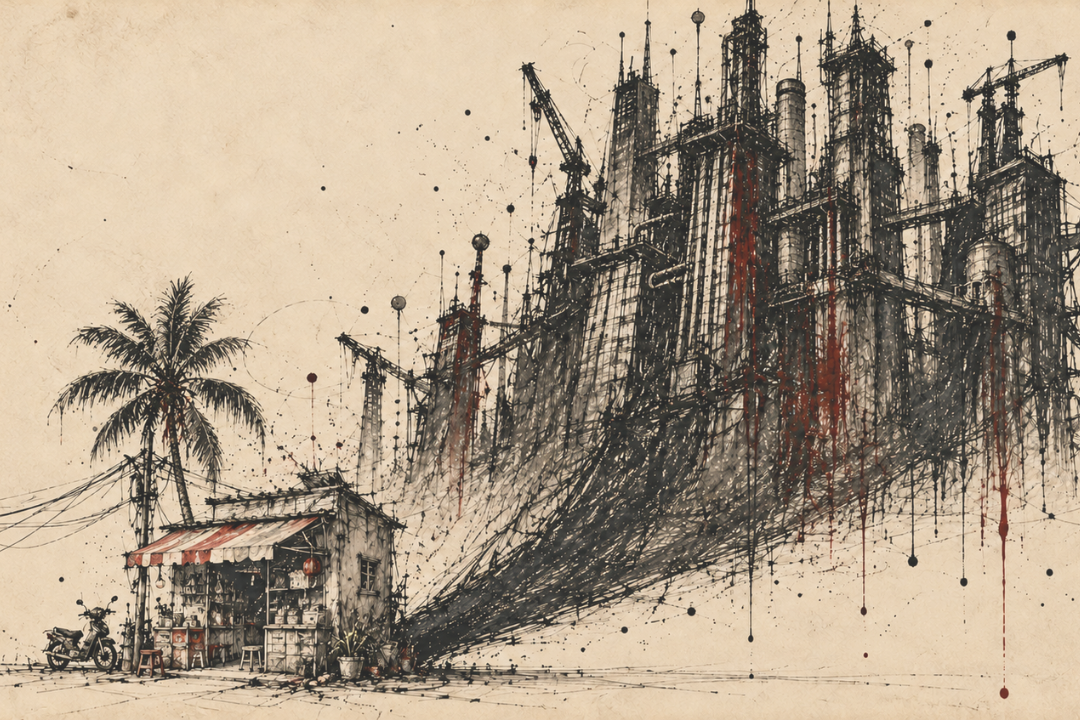
We mistook getting bigger for being ambitious.
I have a slightly awkward problem with my profession. Well, many, actually, but today we'll talk about one of them.
It’s no secret that I, Carmelo Giuliano, am a venture capitalist. Shocking, I know.
I raise funds and deploy capital. My job actually depends on finding companies that can become colossal in scale.
Not good companies. Not pleasant companies. Not companies that make their owners a modest living…
Enormous ones.
If I invest in a founder who spends the next decade building a profitable $5 million business, employs fifteen people they genuinely like, owns a healthy chunk of the company, goes home for dinner every evening, and never again has to ask anybody's permission to take a vacation, there is a decent chance I have made a tragically bad venture investment.
If my friend owned 100 percent of that exact business, I would probably tell them they had cracked the code. Solved the mysteries of life. Found the elusive keys to happiness.
I don't have a neat way around this contradiction. Which is why I’m writing about it.
Venture capital really does need extreme outcomes. The portfolio math depends on a relatively small number of companies becoming disproportionately valuable. Cambridge Associates estimates that roughly 90 percent of venture value has historically come from the top 10 percent of companies.
So investors ask founders things like: how large is the market? Can this become a billion-dollar company? What happens if it works everywhere? Why can't someone else do this? Can it scale?
Does the TAM somehow add up to three times global GDP, as startup TAMs now seem required to?
These are obviously quite sensible questions when somebody is asking you for startup funding.
The trouble starts when they become questions we ask about everything else.
It appears that at some point, the logic of the good old venture portfolio escaped containment.
The restaurant needs another location. The consultant needs an agency. The freelancer should hire and outsource. The creator needs a product line (or two). The hobby should become a side hustle. The side hustle should become a startup. The startup should dominate a category.
Hustle hustle hustle hustle. Every moment you waste, others lap you.
Your income should grow. Your audience should grow. Your company should grow. Your net worth should grow. Preferably all of them at once.
I participate enthusiastically in much of this, which makes what follows a bit inconvenient:
I wish more things would stay tiny.
Sometimes a Lamp Shop Is a Lamp Shop
I had the privilege of living in Vietnam for more than five years.
For those who don’t know, it’s a communist country that underwent tremendous changes and economic reform in the 1980s and 1990s. Some vestiges of traditional communism remain, but it’s truly bizarre from an economic perspective.
One of the things I loved about the neighborhoods where I lived was the sheer density of tiny businesses run and operated out of the actual house where the owners lived with their families.
This was just my experience of a few places, not some grand theory of Vietnamese culture. Vietnam obviously has huge companies, ferociously ambitious entrepreneurs, and startups chasing global markets like anywhere else.
But at street level, I kept encountering another bizarre, friendlier sort of capitalism.
You would find clusters of shops selling almost the same thing.
Entire streets where everyone sold mattresses. Or motorcycle parts. Or praying shrines. Or hardware. Or lamps!
So many lamps.
My brain, poisoned by years around startups, could look at a street containing six little lighting stores and immediately discover seventeen strategic deficiencies.
Where is the differentiation?
What's the moat here?
Why has nobody consolidated this?
Surely the region is crying out for Lampli, the AI-enabled operating system for Southeast Asian illumination.
Instead, if one shop didn't have the specific bit of PVC pipe you needed to fix your janky bathroom sink, the owner might point you toward another guy next door who did.
Terrible funnel management!
There are millions of household businesses or “hộ kinh doanh cá thể” in Vietnam. By the end of 2025, Vietnam had roughly 6.1 million household businesses, employing nearly 10 million people, according to VCCI.
Many of the businesses I saw were physically entangled with family life. The store was underneath the home, or beside it. There was no commute because there was nowhere to commute to. People worked in the same neighborhoods where they ate, slept, raised children, drank coffee, played cards on the corner, sang karaoke, and knew everybody else.

I remember shops where the boundary between somebody's business and somebody's home was practically nonexistent.
You might be standing there looking through boxes of screws and obscure little hardware pieces while, a few meters behind the counter, a grandmother was watching television, somebody else was whipping up the best-smelling meal you’ve ever imagined, and too many plastic chairs spilled out onto the pavement, while jovial uncles drank beer and exchanged stories.
The shop wasn't some separate professional realm that everyone commuted into each morning. It was stitched directly into the rest of life. And I can’t say whether any of these people were happier or better off for it.
That would be an obnoxious thing to conclude because somebody seemed content while selling me a screwdriver or a new cooking pot.
What stayed with me was the apparent lack of embarrassment about remaining small.
The businesses did not always look like embryonic corporations that had somehow failed to discover their destiny.
Sometimes a hardware store was just a hardware store.
It made money. It supported a family with 4 generations living under one roof. It opened again the next morning.
Maybe the owner wanted ten more stores. Maybe they wanted their children to take over. Maybe their children would sooner leap into the Mekong than spend another afternoon selling electrical fittings.
I haven’t got the slightest clue.
But I spent years around entrepreneurs who, at least from the outside, didn't all seem consumed by the assumption that their present position was inherently insufficient.
That idea has followed me around ever since.
The hardware-store owner is not necessarily a failed Jeff Bezos.
Some Things Get Worse When You Scale Them
Here’s more Carmelo lore for you.
I grew up loving New Haven pizza. It’s without a doubt the best pizza in the world, and I’ll die on that scrumptious pizza hill any day of the week.
For people from Connecticut, discussing pizza eventually begins to resemble religious sectarianism, so I will tread carefully.
Sally's Apizza opened on Wooster Street in 1938.
Frank Pepe had opened nearby even earlier in 1925.
For decades, these places were intensely tied to New Haven itself. The ovens, the room, the neighborhood, the people working there, the routines accumulated over generations.

Both eventually, and quite recently, expanded.
People like the pizza. More people would like access to the pizza. The names have enormous value. There is money sitting there asking politely to be collected.
Personally, I don't think the experience translates perfectly.
That doesn't mean the other locations are bad either.
Frank Pepe's has gone to impressive lengths to reproduce its cooking process, including building versions of the original coal-fired oven at new restaurants.
But you can copy an oven a hell of a lot more easily than you can copy seventy years.
We are trained to treat friction as something awaiting optimization.
But a shocking amount of human pleasure lives inside friction. The drive, the wait, the room that's too sufficating, the fact that you can't get it everywhere. The impossibly long line around the corner and then another corner in the dead of winter when you’re freezing and leering at the happy family inside devouring a slice of heaven.
Then business logic arrives, looks at this peculiar little organism that people love, and says: excellent. How do we make thirty more of them?
Sometimes that’s possible.
Other times you reproduce the sign, menu, recipe, furniture, and Instagram account while the invisible thing people loved stays behind, or evaporates into the ether without anyone noticing.
Non-scalability can actually be part of the value.
And this isn’t just limited to pizza shops either; it happens with people too.
While scouring the web for dinner ideas, I’ll find an amazing new YouTuber who makes excellent vegetarian recipes. That's all I want from this person. Show me what to do with an eggplant on Tuesday night, and we’ll have a beautiful relationship.
But success now comes with an expansion pack:
- Cookbook
- Podcast
- Paid community
- Paid product placements
- Specialized cookware
- Second channel for vlogging
- Third channel for vlogging about the vlog
- Merchandise
- Production company
- Hire editors
- Hire a COO
Eventually the person who taught me how to cook dinner has forty employees, a board meeting, and no time to experiment with new recipes or cook anyone dinner.
Maybe that's exactly what they were hoping for when they first started making awkward cooking videos for nobody in particular. Fantastic, I’m happy for them.
What interests me is why choosing not to do it feels like a failure to capitalize on success.
Capitalism has an almost supernatural ability to watch somebody enjoying themselves and whisper, "You could ruin monetize that."
Then, five minutes later: "You could monetize it even more."
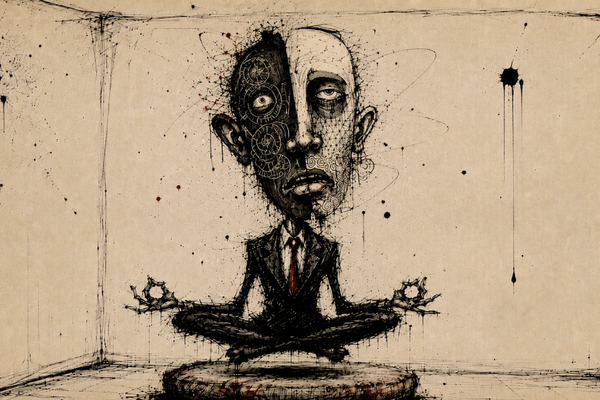
I am admittedly susceptible to this. I recently managed to turn sitting silently and staring at a wall into an essay about productivity. For me, even meditation needs performance analytics.
So don’t let me sound like I’m being judgmental or morally grandstanding over here.
We Confused More With Better
I think we've somewhat, somehow collapsed two different ideas into one.
Wanting to build the largest company in your industry is obviously ambitious. The mistake is treating every other ambition as a lesser version of it.
Those ideas occasionally belong together. A better payment network, for instance, becomes more useful when millions of people can suddenly access it.
New energy infrastructure may require earth-shaking amounts of capital.
Pharmaceuticals, semiconductors, space technology, and other difficult industries cannot always be built by three people with laptops and a Stripe account.
Some things should get incredibly big.
I invest precisely because I believe this to be true.
But ambition has other shapes (and sizes).
A carpenter can be obsessive about becoming astonishingly good at making bespoke furniture without secretly hoping to operate 400 furniture stores.
A chef can want one extraordinary, Michelin-star restaurant.
A musician can want to make beautiful records and play packed 1,000-person venues rather than play 100,000-seat arenas.
And actually, on the music point, I would rather see many of my favorite bands in a room with 1,000 people (or ideally less) than in a stadium where I spend half the night watching them on a television the size of Luxembourg.
The obnoxious problem is that “better” is way, way harder to put on a graph than “more.”
A restaurant can become better without opening another location, or a writer can become better without doubling their readership.
A company can become healthier, more resilient, and more enjoyable to work at without increasing headcount.
We have fantastic instruments for measuring expansion and considerably worse or nonexistent ones for measuring whether the thing itself has actually improved.
Yet the stadium remains the obvious symbol of arrival.
Bigger venue. More tickets. Bigger tour. More money. Success.
The scoreboard gained another zero or two.
Modern life is full of these very same scoreboards.
Followers. Revenue. Valuation. Employees. Subscribers. Streams. Locations. Market share. Net worth. Fund size. Everything needs to become a bigger number.
Once something becomes measurable, increasing it starts feeling like the purpose, accompanied by a whole bunch of dopamine and pride.
Numbers are comforting because they settle arguments that quality cannot.
“Am I doing something worthwhile?” is difficult.
“Did the chart go up?” fits neatly into a quarterly update.
“Is my work getting better?” could keep you awake for nights on end.
Another 20,000 followers gives you a tidy answer before breakfast.
Why have 100,000 followers when you could have 200,000? Because the scoreboard never stops.
A Great Business Can Be a Bad Venture Investment
My own industry deserves one defense here.
Venture capital is not supposed to fund every worthwhile business. Most businesses would never ask for venture capital, nor warrant a check being written.
It is a specialized financing mechanism harking back to the days of explorers and the East India Company, and spice-seeking merchants setting off for new continents.
Now it's a mechanism for a peculiar subset of companies where large markets, capital requirements, technology, network effects, or other characteristics create the possibility of disproportionately large outcomes.
A stable, profitable $20 million company might be spectacular for its owner and completely wrong for venture capital.
Fine.
The phrase that really perturbs me is "not venture-backable" when it starts carrying the stink of "not worth building."
"Not venture-backable" is like saying a cargo ship isn't suitable for Formula One. It isn't an insult. Different machine, different objective. Still incredibly useful and worthy of existing.
I have met founders who almost apologize for businesses that make money.
"We could probably only get this to $10 million in revenue."
Only.
You created something from absolute nothing. People voluntarily give you money for it. Employees receive salaries because it exists. Customers find it incredibly useful. You might own most of the company.
But unfortunately, Marc Andreessen may never hear about you.
Thoughts and prayers.
A perfectly good business can be a terrible venture investment. We should be able to hold both thoughts at once without our heads exploding.
Venture capital needs scale. Most other things, however, don't.
What Were You Trying to Get Rich For?
There is another critical number missing from most of our dashboards.
Time.
A person starts a company because they want that sweet, sweet independence.
Five years later they have:
- sixty employees
- three offices
- an investor update due tomorrow
- twelve Slack channels
- two pending lawsuits
- a weekly executive meeting
- a Head of People scheduling a workshop about burnout
Freedom at last!
Revenue has increased enormously. Exponentially.
Something else likely moved in the opposite direction… Free time went down. The calendar became a horrific crime scene.
This is partly what I kept noticing in Vietnam. A person living above their shop might earn less than an executive commuting into a corner office, but our normal measurements struggle to account for an absent commute, lunch with family, control over one's schedule, familiarity with the neighborhood, independence, or an afternoon spent doing absolutely nothing because nobody came in.
Small businesses can obviously be brutal too. They fail all the time. They create financial stress. Informal employment can leave people quite exposed.
There is no reason to romanticize any of this. Or disparage ambition.
Time, autonomy, and control belong on the balance sheet too, even if accounting has nowhere to put them.
And people sometimes build businesses to acquire those things, then trade every last one away because the business keeps demanding growth like some malevolent black hole with no sign of stopping.
At what point does making your company bigger begin destroying the reason you wanted a company in the first place?
There isn't one answer.
Some people love the machine.
They want ten thousand employees, global offices, organizational complexity, and a problem large enough to swallow their lives. They would go insane running a twelve-person company and leaving work at four.
I know some of these people. I invest in them.
But another person may want twelve employees and Friday afternoon free.
But in our culture, why does that second version of ambition require a defense?
Enough
"Enough" sounds almost obscene in business.
Imagine a founder walking onto a conference stage and saying:
"The company is at a good size right now. Customers seem happy. Everybody is paid well. I’ve been enjoying my life. I’ve even recently picked up birdwatching and kayaking. We don't really need to grow next year."
Security would escort them out. The investors would prepare the guillotine.
We have become oddly uncomfortable with completion.
There is always another level because there is always another measurable thing.
Another zero. Another market. Another round. Give me more.
I won’t pretend I’m somehow magically immune to this. Quite the opposite, actually.
I want my companies to grow. I want the fund I am raising to become successful. I want the companies I invest in to become extremely valuable, both in financial terms and for humanity as a whole. Hell, I even want more people reading and subscribing to Gonzo Capital.
If 100,000 people subscribe tomorrow, I will not preserve the authentic artisanal newsletter experience by asking 95,000 of them to kindly screw off.
I still like winning. I am still ambitious.
Ambition without a definition of enough, though, has no finish line, only progressively more expensive checkpoints.
I don’t think the hard part is just wanting less either. Knowing what you actually wanted in the first place is a bit trickier.
I must acknowledge too that there is also a convenient version of “enough” that is really just fear with much better branding.
Someone can decide they have reached their natural size because growing would require doing something frightening, firing someone, delegating control, risking failure, or discovering that they weren't capable of the next level after all. I’ve certainly battled these thoughts and emotions before.
Smallness is not automatically wisdom any more than scale is automatically ambition. Figuring out whether you are satisfied or simply scared may be the hardest part of the whole exercise.
One restaurant might be enough. Maybe twelve was your magic number from the get-go.
One creator genuinely wants ten million subscribers and a media empire. Another wants 80,000 people who care about their work and enough income to disappear every Friday (to give them time to actually pursue their passions and hobbies without a voyeuristic camera watching them).
I know there are founders who dream about ringing the NASDAQ bell someday.
I hope that those who might want eight employees, complete ownership, and the permanent ability to ignore LinkedIn know that they are also every bit as ambitious.
Neither objective is inherently nobler than the other. The interesting part is who chose it.
Did you decide what winning looked like? Or did you inherit a scoreboard and start running?
Tomorrow, I will probably get on a call with a founder and ask how their company becomes a billion-dollar business. I’ll likely tell them their current plan isn't ambitious enough.
I just hope and pray they decided they wanted the billion-dollar business before people like me ever started asking.
I just don't want everything I value to behave like one of my investments. And these days it sort of does feel that way.
I want weird, little neighborhood stores that have no well-thought-out expansion strategy.
I want restaurants whose magic stubbornly refuses replication, rather than becoming another soulless franchise.
I want creators who discover they make enough money and then commit the unforgivable business sin of continuing to do the thing they enjoy.
I want bands in rooms where you can actually see the band.

I want independent companies that reach their natural size and stay there because their owners like their lives as they are.
Mostly, I want there to remain some respectable way of saying: this works. I like it. I have enough.
Not everything small is waiting to become big.
There is ambition in building an empire, and there is ambition in knowing you never wanted one.