Music for People Who Aren’t Listening
I once played live music for a Russian oligarch who never once looked at the stage. That gig is where this piece on Suno, copyright, and the AFM's lawsuit against Warner and Universal begins.

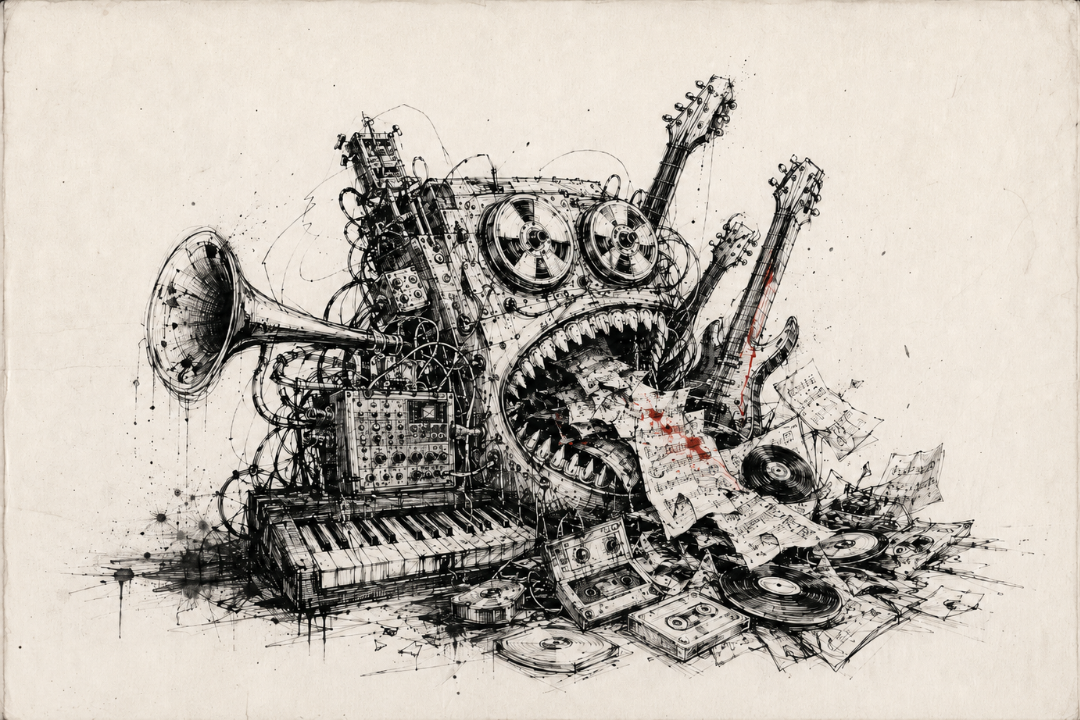
The palatial, cavernous villa sat on a small island in Thailand, large enough to make an emperor blush with envy.
There were vacant rooms nobody ever seemed to enter, sprawling terraces overlooking the sparkling water, and a dining table covered with enough food to feed a famished village.
Platters of wagyu beef, exotic fruits, a sea’s worth of fish, luxurious desserts…
By the end of the night, most of that food would still be sitting there, untouched.
On the bright side, at least the army of staff and hired help was able to try caviar and king crab for the first time.
You’re probably wondering at this point where this is going, why I was there, and why you should care.
Well, somehow I had been hired to play music for an actual Russian oligarch.
I do not use “oligarch” here as decorative shorthand for a rich man with an ugly watch. He was, as far as I could tell, the genuine article. Flanked by well-dressed guests, all seemingly bored in the face of their splendorous status quo.
The villa, the staff, the security, the guests, and the studied boredom all suggested that there was nothing out of the ordinary. No diminished decadence on their never-ending vacation. No expenses spared.
We set up on stage, tuned our instruments, shook out the nervous jitters, and waited. Not knowing what to expect, we were instructed to start playing our set for the empty gala.
Audience be damned. The guests couldn’t possibly walk into a silent banquet after all.
When they eventually wandered their way over to the beachside feast, they did not seem particularly interested in us, nor impressed with the scenery in general.
I cannot remember much eye contact. There was no hostility in it. Hostility would have required acknowledgment.
We were another part of the arrangement, like the lighting, the flowers, the hired Russian dancers wearing traditional, folklike garb, the local Muay Thai fighters staging a private gladiatorial spectacle, or the pristine food decorating the street-sized table.
And so we played. A few times we replayed songs that we played before anyone had arrived at the beginning of our set.
Fortunately or unfortunately, nobody noticed.
I had performed for indifferent audiences before. Anyone who has played music for money or entertained in any way, on any level, eventually learns that being heard is not included in the contract.
You can spend years trying to create something beautiful and perfecting your craft, only to then discover that the person paying simply isn’t interested in the process, the person, or the actual music itself.
They mostly need a respectable sequence of noises to fill the intermittent gaps between conversations.
Luckily for my younger self, that gig paid very well. So well, in fact, my partner at the time and I treated ourselves to a mini vacation at a resort on the island AND a few new instruments like bass guitars, amps, and a keyboard for our growing collection of dust collectors.

This paid much better than most nights when people actually cared or listened. When I was a much younger man, I was accustomed to playing more for much less, and feeling more heard, seen, and appreciated. More useful, more jovial, more creative and motivated. More in love with the idea of playing music as a profession.
In that bizarre little royal banquet on the Gulf of Thailand, the strange part was not that the guests ignored us. Their indifference was familiar. What unsettled me most was how little it mattered in the grand scheme of that transaction. They had purchased live music, and live music was certainly present, as were the people tasked with making it on the spot. Our attention was required. Theirs was, well, optional?
Okay, that might be a bit unfair.
Someone may have been listening quietly. The sad-looking billionaire may have loved every note and simply possessed the facial expression of a man reviewing disappointing quarterly reports.
Resting rich face? I cannot claim to know what happened inside anyone else’s head.
I only know what it felt like from where I stood on stage.
It felt as though the music had been mechanically separated from the people making it. Our physical bodies were necessary because the “technology” of the evening still required hands, breath, memory, coordination, and a willingness to remain on stage. But socially, we were already absent, removed from the mix. The most we could hope for was a photo or brief video for some influencer's Instagram reel.
At some point I looked across the villa at the smorgasbord nobody seemed to eat and wondered whether the food and the entertainment and the dancing and the music were serving the same purpose… To demonstrate abundance and serve as a not-so-memorable backdrop.
Their consumption was almost entirely beside the point.
I couldn’t for the life of me recall what we played that evening. I remember the scene more clearly than the songs. That may say something unflattering about the performance, or about memory, or about what happens when art becomes a transactional product for the highest bidder.
Unfortunately, there is an entire economy out there built around music that nobody listens to very closely, if at all. You’ve probably heard it countless times without thinking about it.
It plays beneath advertisements, hotel breakfasts, corporate presentations, video games, reality television, restaurants, podcasts, shopping centers, and luxury feasts on tropical islands.
Most of it is made by working musicians who understand that transcendence is not always the assignment. Glamor and fame are not guaranteed. Sometimes the assignment is simply to make the silence less noticeable.
For a long time, producing that atmosphere still required a person. Even when musicians were treated as decorative labor, their physical presence created obligations. They had to be hired, scheduled, transported, fed, paid. Their presence endured as human beings.
A person had to learn the instrument. Someone had to write or arrange the music. Someone had to show up, play or record it, invoice for it, and accept that the audience might remember the dessert more clearly than the melody.
For most of human history, even disposable music required an inconvenient, pesky human somewhere in the mix.
Well, now companies like Suno have begun removing the inconvenience.
How the Machines Learned to Play
This so-called machine never wonders or cares whether anyone is listening… It never dreams of bright lights, or infuses its own trauma or drama into the art, transmuting pain into audible emotion.
It does, however, require something to listen to first. It needs inspiration to put it as delicately as I possibly can.
Suno can take a few lines of text and return a complete song, all in the time it takes to skip to the next track on Spotify.
Phantom vocals arrive already attached to somewhat sensible lyrics. Drums, guitars, synthesizers, orchestras, and production choices appear without anybody booking a studio session or arguing over that “perfect” final mix.
You can describe the mood, genre, and subject, then wait for the machine to “compose” something that resembles music made by people who dedicated half a lifetime to their crafts. I won’t sit here and pretend it isn’t impressive. But that ability obviously had to come from somewhere.
In a court filing, Suno acknowledged that its training data included essentially every reasonable-quality music file it could access across the ENTIRE open internet. The company described a collection containing tens of millions of recordings, including copyrighted material owned by the same record companies now suing it.
Even that description failed to capture the sheer ambition of the operation.
In July 2026, a hacker breached Suno and provided 404 Media with internal source code and information about its training libraries. According to the material reviewed by the publication, Suno built systems to scrape and collect songs, lyrics, scores, stock music, podcasts, sounds, and other audio from across the entirety of the web.
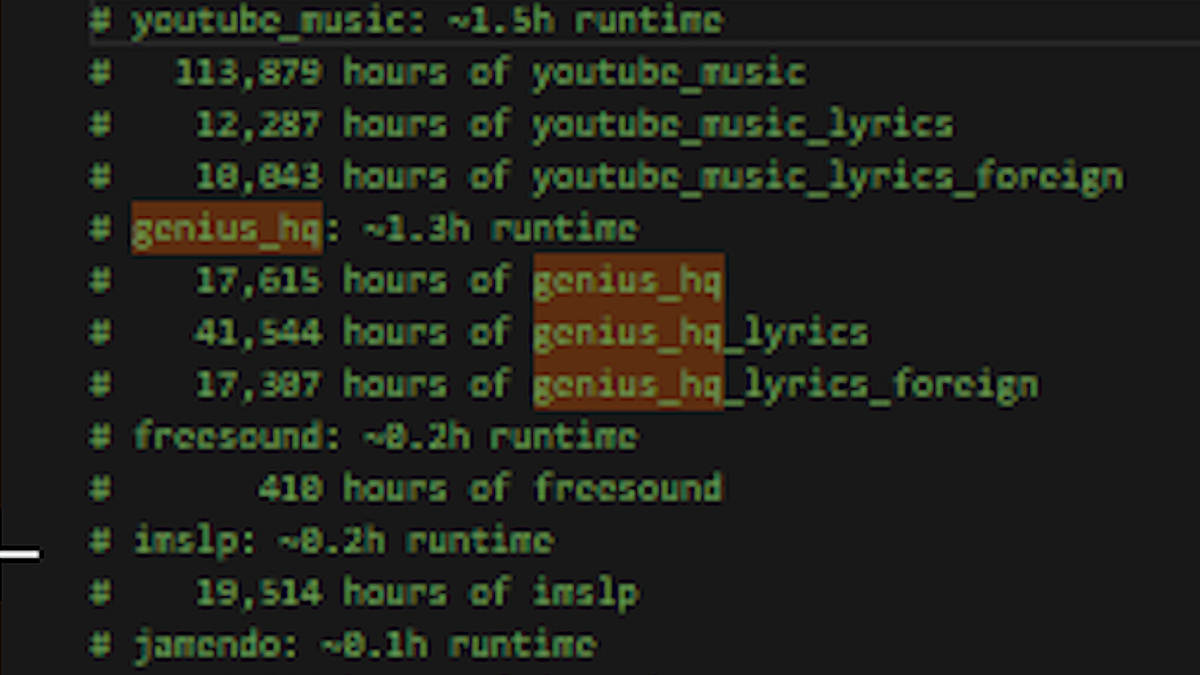
The listed sources included YouTube Music, Deezer, Genius, Pond5, Jamendo, Freesound, and the International Music Score Library Project.
One internal file reportedly referred to more than two million clips taken from YouTube Music alone. Even now, I see more musicians and creators such as El Stepario Siberiano, who are publicly pleading for help, unsure how to deal with the fact that they are non-consenting AI trainers.
Other files measured the material in hours, including more than 100,000 hours from one YouTube Music dataset and another 150,000 hours from a separately tagged collection.
Nobody could possibly listen to a sliver of a fraction of it all in a lifetime. The machine definitely doesn’t have to.
This was a strange case where musical history was hastily converted into inventory.
Every forgotten album, private obsession, regional genre, embarrassing phase, wedding song, protest anthem, studio experiment, and angsty teenager screaming into a cheap microphone could potentially become another microscopic contribution to the ever-growing behemoth.
The collection reportedly extended beyond professionally released songs. It included stock libraries, sheet music and scores from the International Music Score Library Project, podcasts, lyrics, and material uploaded by ordinary people who may never have imagined that their work would help train a commercial music factory.
The sheer scale makes individual consent almost absurdly impractical, a fact they strategically and routinely use to their advantage.
Imagine knocking on the door of every musician, producer, composer, singer, session player, label, publisher, and estate whose work contributed to the machine’s education. The negotiations alone might outlast recorded civilization.
Technology companies tend to treat this impossibility as an argument in their favor. Permission at that scale would be difficult, expensive, unrealistic, and perhaps fatal to the money-printing product itself.
Therefore, they build first and leave the legal system to pick up the pieces, trying to determine whether permission was necessary.
A tactic all too common in the AI space already, even in other niches.
I also can't sit here and pretend there isn’t a certain venture-backed elegance to this approach. It’s practically taught in business schools.
Suno argues that training a model on copyrighted recordings qualifies as fair use. Its position is that the software analyzes patterns across existing music so that users can create new work.
This is along the same lines as the famous 90’s case, Grand Upright Music, Ltd. v. Warner Bros. Records Inc., where Irish singer Gilbert O’Sullivan (via his label, Grand Upright Music) sued rapper Biz Markie and his label, Warner Bros. Records, for sampling the distinctive piano loop and opening words from O'Sullivan's 1972 hit "Alone Again (Naturally)" for his own track "Alone Again" on the album I Need a Haircut.
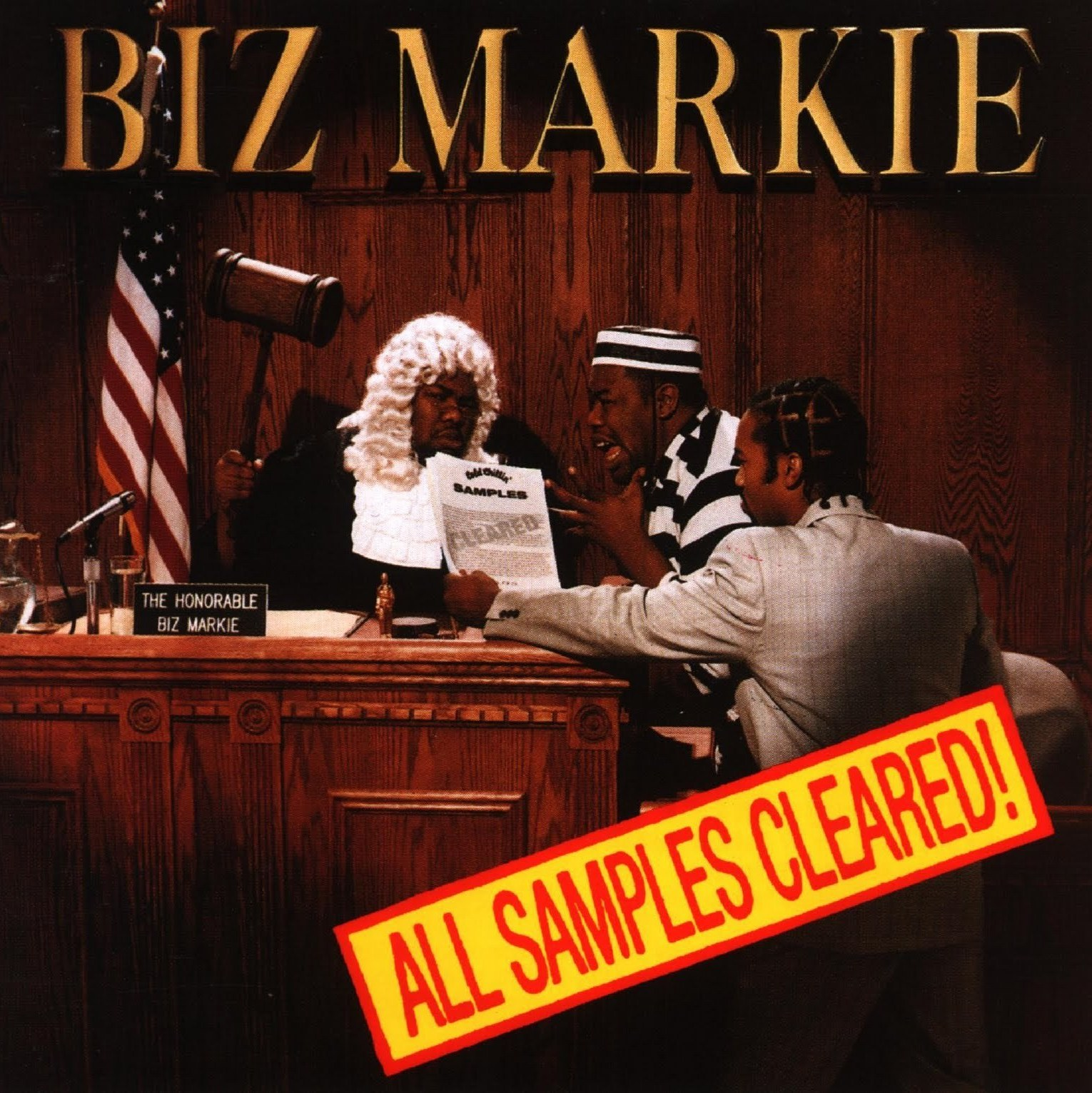
The ruling helped accelerate an industry practice in which commercial samples were cleared in advance, with royalties and permissions negotiated case-by-case.
To take it even further, Suno has even compared the process to a young musician learning rock music by listening obsessively to rock songs. In its legal response, Suno accused the labels of protecting their market power from a new creative tool.
The analogy is attractive. Every musician is trained on other musicians. We all stand on the shoulders of giants after all.
I learned by listening to songs I loved. Albums I got for Christmas each year from Pink Floyd or Led Zeppelin or Bob Dylan. I recall attempting to imitate them poorly, gradually recognizing chord progressions, rhythms, structures, and tricks on my path to ultimately learning guitar and piano and singing.
Nobody develops a musical vocabulary alone. Even the strangest experimental artists and generational savants carry ghosts and echoes in their hands.
Still, I never swallowed up millions of recordings whole like a blue whale feasting on a colony of krill with exceptional speed and ease.
I could never ever study every genre simultaneously. Or remember every production choice. Or turn around and manufacture a catalog of sparkly, polished songs before lunch. My influences were limited by time, access, taste, geography. Oh, and the patience of anyone forced to hear me rehearse for hours on end.
Those limitations helped make me a particular musician. A model’s strength comes from escaping those very same limitations. This is overall one of the main appeals of artificial intelligence in our modern age.
Suno does not need a childhood, a hometown, a broken heart, or a cool older sibling with a suspiciously good record collection. It can absorb more musical history than any person could encounter in all our lifetimes combined, and use the patterns buried inside it to produce something immediately and eerily familiar.
That familiarity is commercially useful. It is also the primary source of the unease.
The labels claim Suno copied enormous amounts of protected music to build a product capable of competing with the people whose recordings made it possible. Their original 2024 lawsuit identified 560 works. After gaining access to Suno’s training data during discovery, Universal and Sony asked the court in May 2026 for permission to add 61,026 recordings.
They said those tracks represented only a fraction of the millions of their recordings found in the dataset. Suno has opposed the expansion of the case at every turn.
The legal argument will involve fair use, technological protection measures, market harm, and several other phrases capable of putting a somewhat healthy person into a light coma.
The moral question, however, is less technical.
Suno needed music before it could ever hope to make music. Let’s cast aside for a moment the fact that I’m not even sure whether it qualifies as music if a person hasn’t created it.
It needed countless people to sing, play, write, fail, experiment, record, and release their work out into the wild. Their collective output became the soil from which the product grew, although most of them were never told they were planting a thing.
Perhaps the courts will decide that this is simply how learning works for humans. Maybe listening at machine scale remains legally comparable to listening as a person. Or even that the resulting songs are transformative enough to justify the copying required to create them.
Those possibilities do deserve serious consideration. Cheap creative tools can allow people to make music who lacked the money, training, physical ability, confidence, or industry access to do so before. Many Suno users may be doing something more meaningful than manufacturing background sludge for dreary hotel lobbies.
Yet democratizing creation of music does not erase the method by which the tool was built, or excuse it from culpability for the tangible or intangible damage it’s capable of doing.
The public internet was treated as a vast cultural buffet. The developers arrived hungry, took what the model could digest, and promised that everyone would benefit from the resulting abundance.
There was always plenty of food to dine on, but nobody ever asked whether it was theirs to take in the first place.
The Lawsuit Was the Negotiation
Well, the owners of the buffet eventually arrived. And they brought their legion of litigators.
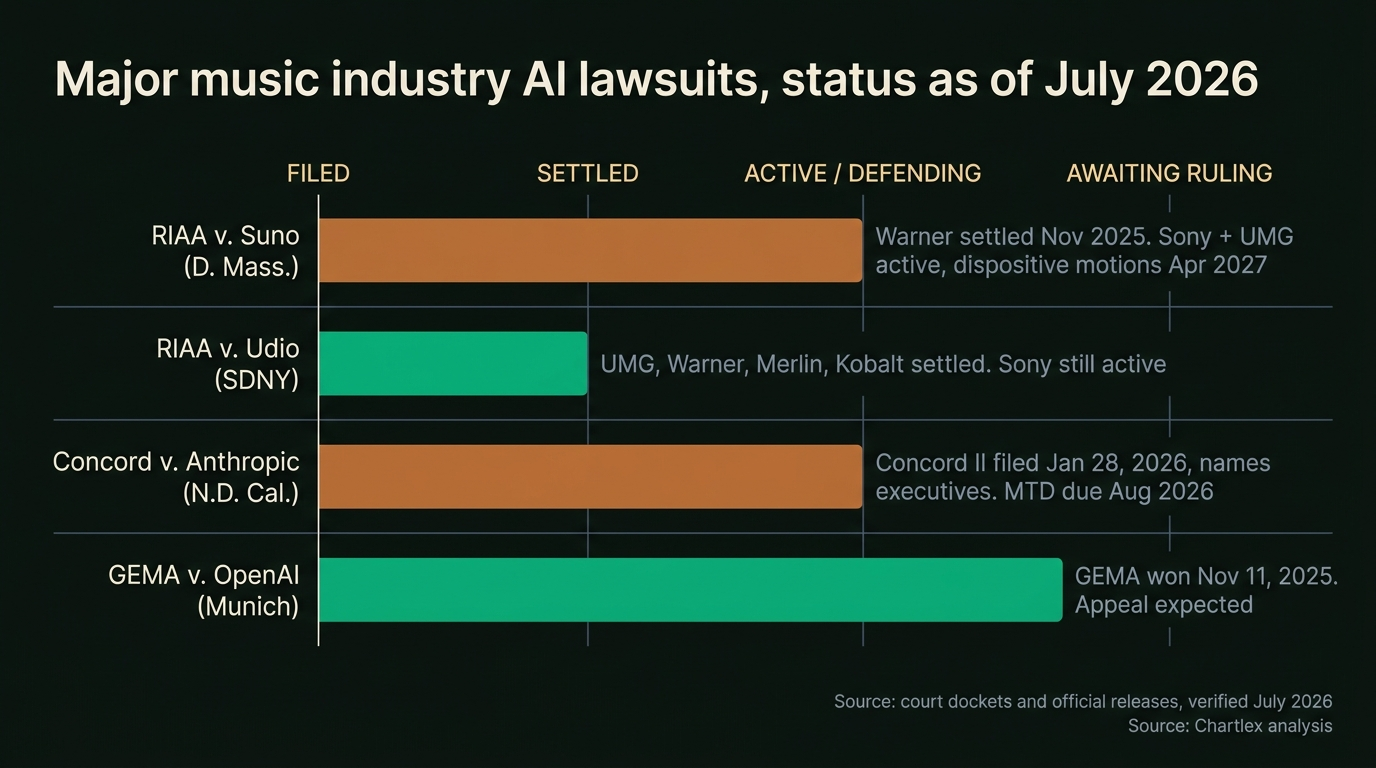
In June 2024, Sony Music, Universal Music Group, and Warner Music Group sued Suno and Udio, accusing both companies of copying copyrighted recordings on an enormous scale to train commercial music generators. The labels warned that synthetic music could compete with, cheapen, and eventually drown out the artists whose work had helped make the artificial intelligence systems possible.
The lawsuits were described as a defense of human creativity. A place to draw a line and the right hill to die on.
The lawsuits also contained an important qualification:
The Recording Industry Association of America said the music industry already supported artificial intelligence developed with permission and participation from rights holders. The fight concerned who had been asked, who had been paid, and who controlled what happened next.
The machine itself… apparently was never the only issue.
Copyright gave the labels all the leverage they needed over it.
Individual musicians are scattered across countries, contracts, genres, and decades. Some are long dead and buried. Others no longer control the recordings they helped create. Negotiating with every singer, producer, songwriter, session player, publisher, and estate would be a mess. Maybe even impossible.
The major labels could offer access to enormous catalogs in a single meeting, which in turn made the courtroom part of the marketplace.
A lawsuit could demand compensation for the past while creating influence over the future. The labels could challenge the way these systems were built, then negotiate a commercial position inside whatever survived, like a parasite lodging itself deep inside a living host.
By late 2025, that process was already yielding deals.
In October 2025, Universal settled its case against Udio and announced plans for a licensed music creation and streaming platform. Warner reached its own agreement with Udio weeks later. Then Warner settled with Suno, the same company it had accused of mass infringement.
The Warner agreement promised new licensed models, opt-in participation for artists and songwriters, and controls over the use of their names, voices, likenesses, and compositions. Suno also announced tighter download restrictions and said the licensed models would replace its existing versions during 2026.
The announcement sounded less like the end of a legal battle, and more like the tip of the spear for a grand product launch.
There is nothing inherently sinister about licensing. Permission does matter. Compensation matters. Artists should obviously have more control over whether a company can manufacture songs using their voices or identities. A negotiated system is plainly better than an industry where developers take whatever they can reach and instruct everyone else to sue later. Usually with far fewer legal resources or capabilities to win.
Still, the sequence is impossible to ignore.
A company can build first, grow quickly, and defend the entire process as fair use. Once the machine becomes too valuable to destroy, the people who control the catalogs can negotiate a share of it. A staple of capitalism. The contract changes the future. It cannot return to the beginning and ask permission before the training occurred.
In theory, the settlements can indeed compensate the relevant owners well enough. It’s possible that past conduct was absorbed into the price of future cooperation. The agreements are private and opaque, so the public cannot see what was paid, forgiven, reserved, or secretly accepted in some forgettable backroom.
What we can see is where the parties ended up and where the cookie crumbled.
Within roughly eighteen months, Warner had moved from plaintiff to partner. Universal did the very same with Udio.
As of the time of writing, Sony has not settled, while Universal and Sony remain active plaintiffs against Suno as of July 2026. Their ongoing case shows that the industry has reached no consensus. Some catalogs are becoming licensed infrastructure while others remain locked up as evidence in court.
Calling this hypocrisy is admittedly satisfying, but ultimately incapable of painting a sincere and complete picture.
The labels had already said they welcomed authorized AI. Litigation helped establish what authorization might cost.
That is the colder version of the story: Copyright did not stop the machine, even a little bit. What it DID do was give the largest rights holders enough power to charge for access to it.
The musicians appeared throughout the announcements. Their creativity justified the lawsuits. Their protection gave the partnerships moral legitimacy. New revenue opportunities were promised in their name.
Yet ownership of a recording does not mean a company personally wrote the song, sang the words, played the instruments, or spent years developing the style now being converted into a feature.
The labels had earned their seat at the negotiating table through somewhat predatory contracts signed long before Suno ever existed.
The next fight would be over who they were entitled to speak for once they eventually sat down and talked.
The Artist Was NOT in the Room
The musicians eventually asked a question the licensing announcements had managed to avoid.
Who gave the labels permission to speak for them?
Were they just being cut out of the picture like they always had been?
In June 2026, the American Federation of Musicians sued Warner Music Group and Universal Music Group. The union accused both companies of licensing recordings made by its members to Suno and Udio without properly compensating or crediting the musicians who performed on them.
Update: July 30: The AFM filed an amended complaint on July 24, naming Universal Music Group, Warner Records, and Atlantic Recording Corp. Both sides are now preparing dismissal motions, with opening briefs due August 14.
According to the lawsuit, the labels secured retrospective settlements for the alleged use of their catalogs and prospective licenses for future AI training.
The companies created a new source of revenue while refusing to tell the union which recordings had been licensed or whose performances were being fed into those models. The AFM argues that these arrangements trigger payment and bargaining obligations under its collective agreements covering new uses of recorded performances.
Warner and Universal disputed that characterization. Universal pointed to its longstanding relationship with the union and said it expected the issues to be resolved through “collective bargaining.” Warner described the lawsuit as “unproductive” because negotiations were already underway.
No matter what the court decides, the dispute is exposing a massive rift that licensing announcements tend to blur:
Owning a recording is different from having made it. Many notable musicians had to learn this in a very public and difficult way.
A label may control the master recording. A publisher may administer the composition. The named artist may possess rights connected to their identity, voice, or likeness.
Beneath all of that are the musicians whose performances remain embedded in the finished song, sometimes without their names appearing anywhere a casual listener would ever likely see.
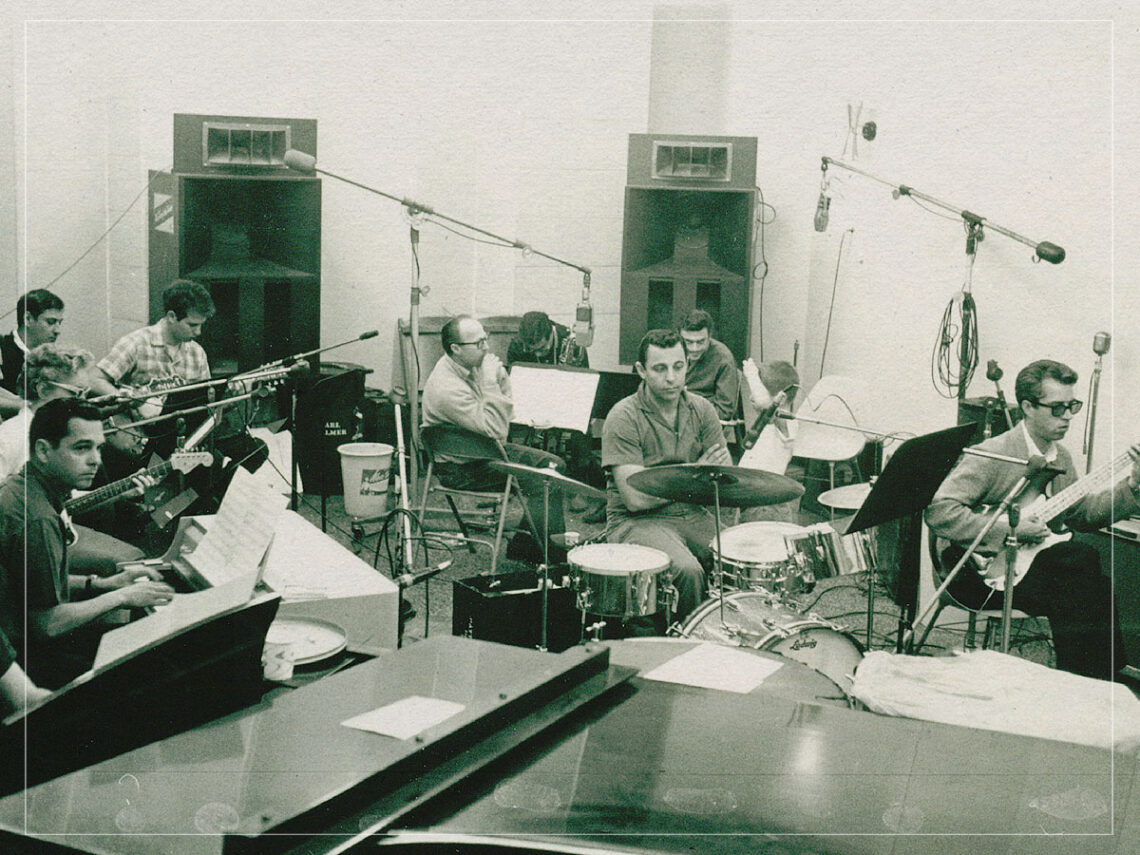
The drummer may have created the rhythm that holds the recording together. A session guitarist may have found the hook everyone remembers. An arranger may have transformed a mediocre song into something capable of surviving for fifty years or more.
They were paid to perform under agreements written before anyone imagined that those performances could be used to train software capable of manufacturing unlimited new music. A relic of the past when things were done MUCH differently.
The labels have promised artists and songwriters meaningful control over this new system. Warner’s Suno agreement says participation in uses of names, images, likenesses, voices, and compositions will be optional. Whether that actually happens or not remains to be determined.
Warner has also described its AI deals as “new opportunities for artists and songwriters to earn money.”
That still leaves a crowded room of people whose work exists inside the recordings without being covered by the language most useful for a press release.
A session musician may have no famous voice to protect. Their name may possess no tangible, commercial value. Maybe nobody will ever build a consumer feature around their likeness.
The value lies in the performance itself. We’re still talking about raw, creative, emotional, human output here.
That performance can help make a recording valuable enough to train a model, while the person responsible has little ability to negotiate with the company using it.
This is where the difference between ownership and authorship stops being philosophical.
The companies holding the strongest legal rights gained seats at the table. They could sue, settle, license, and negotiate future revenue, all while the starving artists who physically played the notes were left asking what else had been agreed to on their behalf.
The labels could eventually compensate them. I sincerely doubt it based on historical precedent and what friends in the industry tell me.
Or maybe collective bargaining will produce a workable formula someday, somehow. The AFM lawsuit may eventually become another negotiation over percentages, reporting requirements, and the definition of a new use.
Even a favorable settlement would reveal something uncomfortable about the sequence.
The technology companies allegedly took the music first. The labels only negotiated once the machines became immensely and obviously valuable beyond a shadow of a doubt. The musicians then had to turn around and sue the labels to learn whether their own work had been included in this infernal transaction.
During that private concert in Thailand, the guests barely acknowledged us, but our presence still created certain obligations. Somebody had to hire us. Somebody had to arrange our hotel and our meals. Somebody apparently paid our meager invoice (Yes, I should have definitely asked for more in retrospect).
The emerging system preserves the performance while gradually removing the performer from every stage that follows.
That may be why the working musician has a whole lot more to fear than the superstar whose name appears front and center, prominently displayed above the song.
The first people exposed will be those whose work is already easiest to overlook… The people who lose the most, the fastest.
The People Who Make the Background
You’ve probably never heard of the people being pushed aside. They are the anonymous backbone of the industry.
They compose for advertisements, corporate videos, low-budget films, podcasts, games, production libraries, and the enormous supply of online content that demands a soundtrack by tomorrow morning. They play additional instruments in studios, sing backing vocals, improve demos, and turn unfinished ideas into professional recordings.
Their work is everywhere, with no fame to speak of.
The biggest artists can sell more than music. Their identities carry value. Fans care about the person singing, the mythology around them, and the possibility of seeing them perform live. A company can generate a song resembling a Taylor Swift hit, but it cannot easily manufacture the strange cultural machinery or the cultlike following surrounding Taylor Swift.
A hotel chain looking for three minutes of unobtrusive piano has fewer sentimental requirements. The music only needs to be pleasant, appropriate, affordable, and delivered on time. Preferably with no buffering or advertisements.
Nobody checking into the hotel will demand to know whether the pianist suffered sufficiently while recording it. There is no official cruelty-free music designation for cage-free pianists.
That is the market where generative music is most useful, the most quickly.
A 2026 study by France’s National Music Center identified composers of standardized background and atmospheric music as “particularly exposed to AI systems capable of producing soundtracks from emotional, visual, or narrative instructions.”
That very same report warned that synthesis and sampling technologies could “accelerate an existing decline in studio work for backing musicians, especially for performances that can be added during post-production.”
The displacement may arrive with little fanfare for most. Even for musicians, it may not yet be obvious. Hopefully this can be a reminder or a wake-up call for musicians and music lovers alike.
A video producer stops searching through a music library and generates a track instead. A composer loses a small advertisement. A session player is no longer called in to add strings, harmonies, or a second guitar. Each individual decision looks insignificant on its own, especially to the customer saving time and money.
Collect enough of them and a profession begins disappearing entirely on the periphery.
A study commissioned by CISAC estimates that generative music could account for “roughly 60 percent of music-library revenue by 2028” under its modeled scenario. The same study also projects that “24 percent of music creators’ revenue could be at risk,” although those figures remain forecasts produced by an organization representing rights holders rather than settled economic facts.
The transition is already becoming ordinary. In a Berklee survey of 1,003 musicians, video creators, marketers, and music supervisors, nearly a third of respondents said they had used “AI-generated music as the final audio track” in published content.
That does not mean every use displaced a paid musician. Some of those videos may never have had a music budget in the first place. A teenager making a short film with Suno is not necessarily stealing a commission from an orchestra somewhere in the world.
The tools can also help independent creators make work that would otherwise remain trapped in their heads. A songwriter can build a convincing demo without hiring a band. A filmmaker with no budget can experiment with a score. A musician can use generated material as a sketch and replace it later with something better.
Democratization is real, but so is substitution.
The same tool that can give one person access to music can remove another person from the equation. Which interpretation applies depends largely on whether you are the person creating something new or the person who used to receive the invoice.
I have been that second person.
The billionaire businessman in Thailand still needed us to stand on the stage. We had to arrive, tune our instruments, wait for the guests, play the songs, and accept the peculiar humiliation of being ignored in person.
A machine can now provide the same atmosphere without requiring a stage, a meal, transport, patience, or eye contact.
Sure, the music will be worse. For background music, worse may still be good enough.
That is the danger for working musicians. They do not need to be replaced by something more talented. Something adequate, instant, and cheaper shall suffice!
Hell, make it nearly free if you can.
The Music That Paid Nothing and Meant Everything
Years before that concert for nobody in Thailand, I found myself sitting at a beaten-down, partially functional, public piano in downtown Denver. My “career,” if you could even call it that, was in its infancy.
The 16th Street Mall, a lively avenue for commerce and recreation, replete with frolicking tourists, families, and talented street performers, had several donated pianos that had all seen many better days.
The piano belonged to everyone, which meant it probably belonged to nobody in particular.
This particular piano had been left outside for anyone to play. From eager children smashing the keys to drunken pub-dwellers out for a night on the town, these pianos loomed large while also blending into the background scenery.
The keys had absorbed weather, dirt, spilled drinks, children’s hands, and the uneven enthusiasm of people who knew the opening notes of the most annoying and overplayed song you’ve ever heard, and fully intended to make that knowledge everybody else’s on the street’s problem.
I was younger, broke, and wandering my way around the United States, playing music for coffee and cigarette money to anyone who would listen and had two coins to rub together.
I recall taking a break from singing, my voice shot and my guitar slightly out of tune from hours of playing in the oppressive mile-high sun.
I sat down and began playing the beaten old piano to switch it up for a moment, with no intention for anyone to hear or appreciate or pay me for indulging. I artfully danced my way up and down the ivory keys, tactically dodging the dead notes.

There was no booking or manager. Nobody had requested a particular song. Nobody had promised to pay me. I was not performing for an audience so much as passing part of the day in the company of an instrument that is very dear to me.
People strolled by. Some even slowed down. Most continued wherever they were going. A public piano rarely defeats the combined urgency of work, errands, hunger, and the deeply important business of staring into a phone and bumping into others while walking along.
At one point, a little girl and her mother came along and stopped. The child began to groove.
I cannot remember exactly how old she was. Definitely young enough to move without wondering whether anyone thought she looked foolish. Young enough that every step still looked slightly uncertain.
She danced beside the piano while I played, wholly committed to whatever private celebration had suddenly possessed her. Her mother beamed with excitement and joy as she watched the pure, unadulterated euphoria only a child can get from the most trivial and wonderful and benign moments.
I remember daydreaming long after that moment, that perhaps this was the beginning of something wonderful.
Maybe she would grow up to become the greatest concert pianist the world’s ever seen. Years later she might even remember the strange man at the public piano and tell the story during an interview after performing at Carnegie Hall.
It’s much more likely she forgot about me before suppertime.
She may never have learned an instrument, or even taken any interest in music recreationally or professionally at all. She may have grown into someone who sings badly in the car, cries during film scores, or keeps one favorite song ready for the days when the world becomes heavier than expected.
That would be more than enough too. More valuable than any well-deserved concert booking fee. I have no idea what the moment became for her. I know what it became for me, and what it has remained.
At a time when I had basically nothing, music made something magical happen. No moment could ever make me fall in love again with music quite like that.
The music crossed the small distance between the piano and a child. She heard it, decided movement was the proper response, and briefly turned an ordinary street into a lively dancehall.
Nobody signed anything.
No ownership changed hands. No platform recorded the engagement. No rights holder negotiated a royalty for the dance. No menacing record labels or lawsuits. The entire economic value of the performance was absolute and utter zero.
As far as I know, no artificial intelligence models were trained in that moment.
What I DO know is that the music industry is about to produce more songs than all the people that ever existed could ever possibly hear.
Machines will compose them in seconds, shaped from the accumulated work of people who spent their lives learning how to make sound matter. All of the recorded, creative, sonic output of civilization compacted into a musical black box.
And you know what? Some of those songs will be useful. A few may even be beautiful.
They could even fool your average listener or a washed-up musician like myself!
The machine can make the song, but the moment still has to happen between people.