The Internet Was Better When It Was Worse
Myspace was ugly, slow, chaotic, and deeply human. As the internet became cleaner, smarter, and more personalized, we may have accidentally lost something valuable along the way.

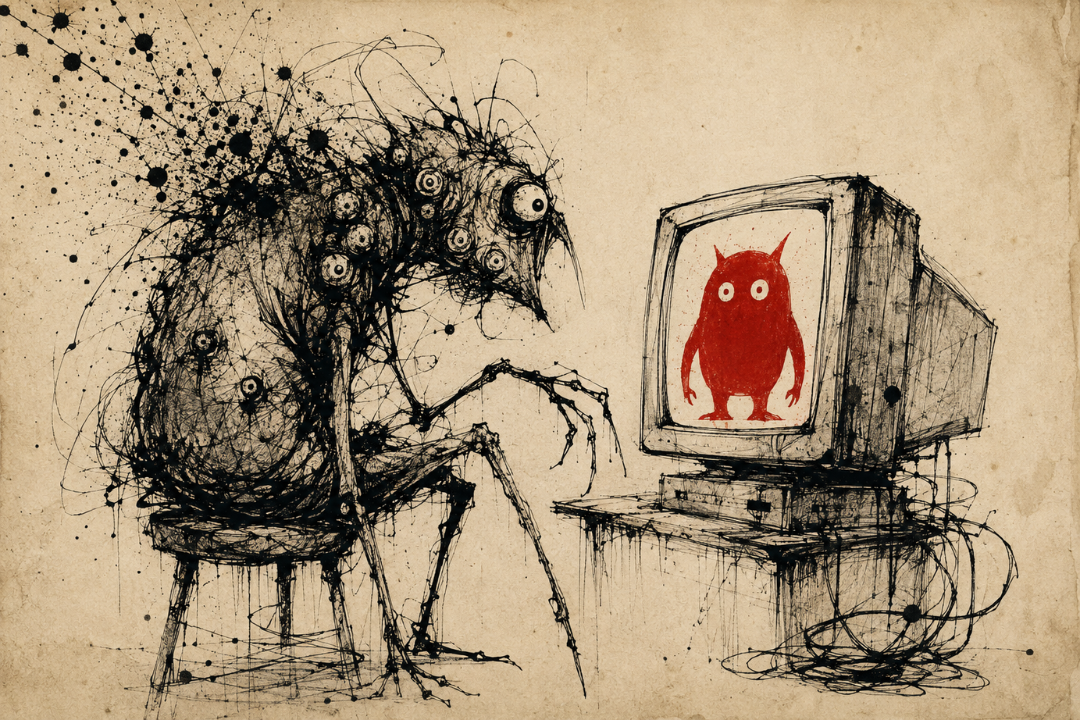
The internet used to look like a fever dream rendered at 800 x 600. A sentient casino carpet that somehow learned HTML.
Not everywhere, obviously…
Sure, there were professionals involved somewhere.
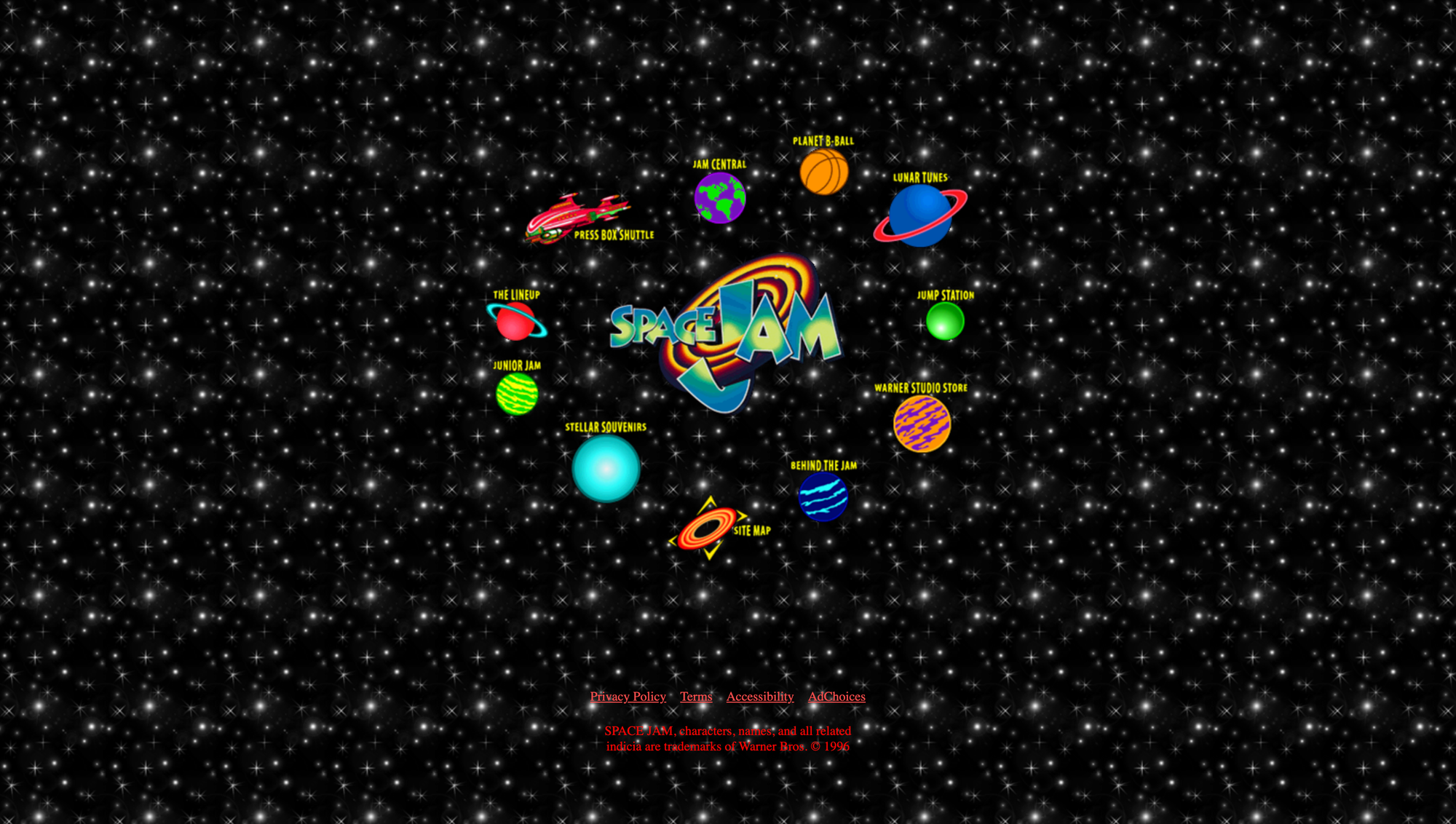
But large parts of it looked like they had been assembled at 1:17 in the morning by a teenager with Napster running in the background, three cans of something radioactive-looking beside the keyboard, and a newly discovered, boast-worthy ability to change the color of text.
And Myspace, one of the first social networks to truly break into the mainstream, was probably the purest expression of this early web feel.
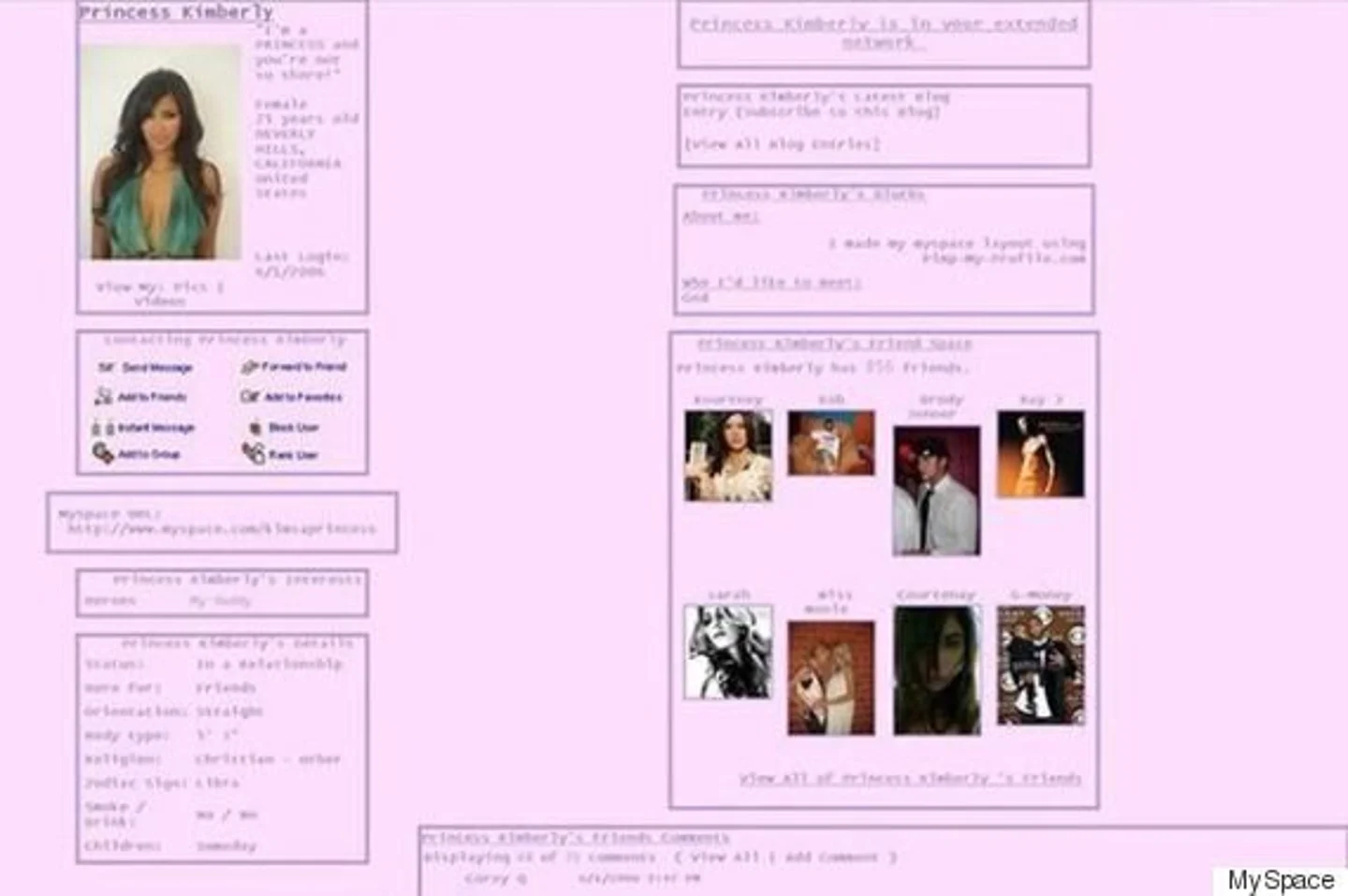
You could visit someone's profile and immediately be assaulted by a song you did not ask to hear. The background might be black with tiny pink skulls, or puke green with edgy quotes. Their name was written in a font designed to be technically visible but functionally unreadable to the human eye.
There were animated GIFs everywhere. Each worse than the last. Some enormous photograph would load one horizontal strip at a time.
Half the page had been copied from another profile, which had copied it from somewhere else, and somewhere else, and pretty much nobody involved completely understood what that pesky code did.
Then there was the Top 8 part of the profile…
A feature that took the ancient human instinct to quietly rank our friends and turned it into publicly available information. Nations have gone to war over less.
It was slow, functionally unstable, tacky, and ridiculous. It occasionally felt like browsing the personal effects of someone who had been allowed to decorate a strip club bathroom.
And I sort of kind of miss it.
That sentence bothers me just a tiny bit because nostalgia is one hell of a fantastic liar. The past gets softer with distance, and the lens rosier with each passing day. We can’t, after all, pretend like that incarnation of the early web wasn’t terrifying in some ways.
People forget the dial-up noises disrupting internet browsing sessions, the broken links, the pop-ups multiplying like digital Herpes, the viruses disguised as Linkin Park songs, and the fact that finding one useful piece of information sometimes required forty-five minutes and the assistance of a message-board stranger called xX_DragonLord_420_Xx.
So when I recently read that Myspace might be attempting another comeback, my first reaction was roughly what you'd expect if someone announced they were reopening a restaurant that gave everyone food poisoning twenty years ago.
Then, annoyingly, I started to think more about it. The longer I did, the less ridiculous the idea seemed to seem.
Not because I desperately need my Top 8 back, or because the world is suffering from an insufficient supply of abominable profile songs. But the news sent me back through an internet I hadn't seriously thought about in ages, one that was slower, uglier, more irritating, and dramatically worse at almost every single, possible, last, little, tiny, thing.
And I began to wonder whether this was precisely the point.
The internet is technically better now. Obviously. We’ve had decades to make it run smoother and optimize it.
Everything loads. Most things work. It’s all searchable. The largest collection of human knowledge ever assembled fits in a rectangle in my pocket, alongside nearly every album, film, newspaper, map, encyclopedia, marketplace and photograph I could reasonably want.
And yet I increasingly find myself missing the internet from when it was worse. I’m sure I’m not alone in thinking that.
Not because I want the malware pop-ups back. Or the teenage angst associated with AOL instant messaging away messages. Or getting screamed at for picking up the phone while someone is sending an email.
Mostly, I’m missing the old internet because I am starting to suspect that some of the things we fixed were not entirely broken.
We Used to Go Places
The internet once upon a time used to feel more magical. Maybe that’s my age showing.
But I do recall the World Wide Web truly feeling worldwide.
Like a collection of wonderful destinations you could travel to digitally. Back when we used to indeed surf the web.
Before we had Myspace and instant messaging, we had hobbyist internet forums where people could coalesce around some obscure topic like the history of freight trains or rare Indonesian butterflies.
You went to a forum. You checked a blog. You wandered into a fan site dedicated to a band, or a specific car, or a television show, or one man's apparently lifelong obsession with restoring Soviet-era radios.
The early internet truly had a sense of geography, strangely enough. You could get lost. You could stumble into something completely unrelated to whatever you had been looking for. You could remember a strange URL that some kid at school told you about and return months later to discover the owner had redesigned the entire thing in lime green.
Even social networks felt more like destinations. You visited someone's Myspace page. Looked around for a bit. You listened to whatever God-awful song they had chosen to represent their soul that week. Then you promptly left to travel elsewhere.
You would need to deliberately navigate your way through the shaky, early internet infrastructure, carefully cobbled together with all of the safety and engineering of a wooden roller coaster. And it was glorious.
The first time in human history that we could travel the world and build communities without leaving our shoddy desk chair in the basement.
Unfortunately, the modern internet feels off. For all its staggering technical progress, the internet somehow feels like it is shrinking, with fewer places to go.
There is now an app for everything. Something carefully designed in a laboratory to peel you away from traveling and keep you neatly confined to a profitable corner of the once great web.
An app where you stand still while an endless torrent of distraction flies by you at warp speed.
A person you know. A person you don't. A war. A cute dog in a bumblebee costume. An advertisement. Another advertisement. Damn-it, another advertisement. Somebody making pasta. A political argument. A man explaining the collapse of Western civilization from the driver's seat of the shittiest Toyota you’ve ever seen.
And somehow, we call this an improved internet.
The revolutionary advent of the “feed” somehow seemed to solve a real problem. There was simply too much internet to navigate manually. Somebody had to sort it all out and tell us where to go.
So we handed the job to machines and algorithms.
We replaced those incredible Geocities and internet destinations with feeds. That sounds like a minor design choice, but I’m not convinced that’s accurate.
A Brief Defense of Bad Technology
At risk of sounding naive, I want to staunchly defend the old internet and what it stood for.
For most of the time the internet has been around, inconvenience has been treated like a bug.I’ve begun to think of it as a feature.
Pages used to take days to load. Now we’ve made them load in the blink of an eye. Getting lost was inconvenient, waiting was brutal, boredom was a systemic failure.
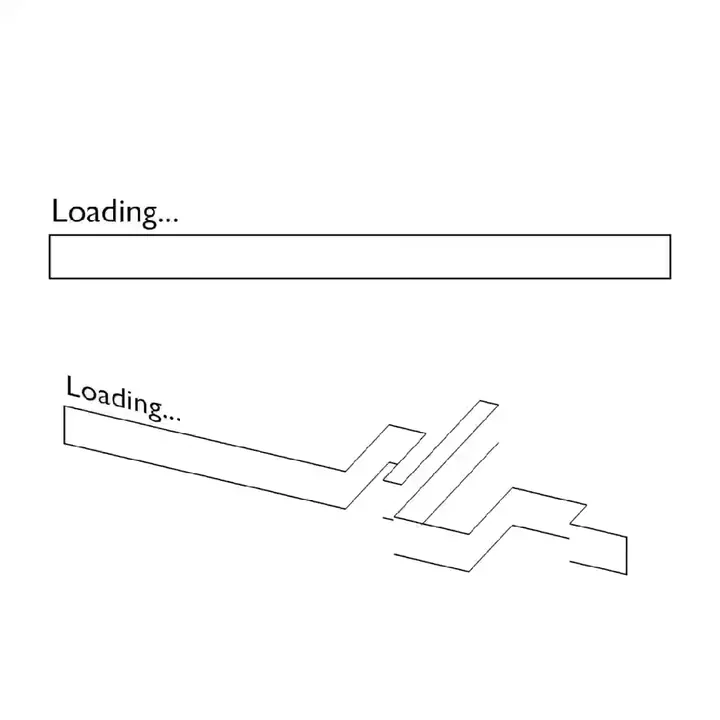
Nobody is advocating or campaigning for the return of buffering wheels or dial-up internet. Nobody wants to lobotomize Google search all of a sudden.
But I do wonder if we tore down inconvenient barriers and bugs without fully understanding what other roles they were performing.
Boredom made you leave and change your scenery. Running out of things to read and destinations to travel to in the seemingly endless World Wide Web made you close your computer and do something else. Having to search for everything meant sometimes discovering something far stranger or better than you originally intended. A bad recommendation from a friend could send you toward a record, film, book, or bizarre corner of the internet that no statistical model would ever have selected for you in a thousand years.
Even waiting and watching the loading bar tended to create little gaps in the machinery. Little instances of boredom that forced us to slow down and process information.
We spent decades sanding them away because friction is the natural enemy of good software or UX/UI design.
Every extra click, every loading screen, every moment where the user has to stop and decide what to do next is something a crack team of engineers can measure, optimize, and eventually eliminate from existence altogether.
Well, it might have worked too well…
There is a version of this that reminds me of our relationship with bacteria. For a long time the goal was simple: kill all the germs. Like those old commercials that boasted about sprays and soaps that killed 99.9999% of germs.
But as you may or may not know, the human body contains entire thriving, complex ecosystems of them, and some of the organisms we had been trying to annihilate were actually keeping everything else functioning.
I posit that the good old internet had a microbiome too.
Broken links, boredom, dead ends, bad recommendations, ugly interfaces, moments where nothing happened. What we thought was mere debris left over from unfinished, imperfect technology could have actually been boundaries we desperately needed.
Interlude: In Defense of Autoplay
Please mind your step in this quick detour; we’ll be back to the regularly scheduled programming momentarily.
I would like to briefly defend one of the worst ideas in the history of the internet, before we get into some of the heavier stuff.
Autoplay music.
There was something magnificently hostile about visiting another person's Myspace profile and having their musical taste immediately thrust upon you without so much as a warning.
You did not consent. There was no tasteful little play button waiting politely in the corner of your screen. You would arrive, and suddenly some infernal Maroon 5 tune was just happening to you like some musical war crime.
This was especially dangerous if your computer volume had been left on high.
But autoplay did something modern profiles rarely do. It made entering someone's page feel like entering their own personal room.

You didn't just learn what they happen to like. You were subjected to it.
Their song was playing. Their background was epilepsy-inducing. Their photographs were arranged badly. Some quote from Fight Club was floating around in a font normally reserved for tattoo parlors. If they had recently pretended to discover Nietzsche, there was a reasonable chance you were going to hear about that too.
It was obnoxious but strangely intimate.
Today, our profiles are cleaner, faster, less unsightly, optimized, and all-around easier to tolerate. They are also all remarkably similar and devoid of true personality.
Same dimensions. Same handful of fonts. Same buttons. Monotone colors. Same little pre-approved, sterile boxes into which we pour ourselves.
I am not suggesting Spotify should begin ambushing visitors to my LinkedIn profile. Actually, that could be pretty cool.
Some technologies deserve to go extinct.
But I do miss the period when the internet occasionally allowed people to make decisions so bad that you knew a human being had definitely been involved.
The Internet Has Learned Who You Are
Back in the day, we didn’t need algorithms to tell us who we were. We poured our hearts and souls and minds out into our profiles and GeoCities, striving to evangelize and share way too much about ourselves to perfect strangers around the world.
Now the internet tells us who we are without much objection from ourselves.
In the early dawn of the usable internet, the machinery patiently awaited our instruction. You typed something into a search bar. You clicked a link. You chose where to go next. And that machine was fast, useful, and completely indifferent to whether you were having a midlife crisis, shopping for hiking boots, or for some strange reason, now developing a minor obsession with Japanese jazz from the late 70s.
Then it slowly started to pay more and more attention to its users and its users' actions.
Search engines learned to predict what we meant when we inevitably misspelled something. Amazon got great at suggesting the next thing we should plop into our shopping carts. Netflix tried to save us from spending forty dreadful minutes choosing the next film to use as a sleeping aid. Spotify built weird playlists around tastes we had never bothered to flesh out or articulate ourselves.
Again, this was mostly great.
Personalization did indeed solve some real problems. The internet was becoming less like a giant filing cabinet and more like a friendly, attentive concierge at an upscale Web hotel.
Then came the feed. Now the machine was no longer politely helping us find what we had asked for. It was now meticulously deciding what should appear in front of us before we asked at all.
Facebook guesses which friends mattered most, and it’s a bit creepy if you ask me. YouTube guessed which video would keep you watching for hours and hours on end. Instagram correctly guessed whose life you were most likely to envy. TikTok turned this into something approaching sorcery, rapidly figuring out what could keep a thumb moving for another thirty seconds, then another, then another, then another. Just one more swipe.
At first, we told the internet what we wanted, before it inevitably began to infer what we wanted.
Eventually, it started trying to know before we did. And like some sort of strange chicken-or-egg type paradox, I’m left to wonder if those desires are truly ours, or conveniently planted in our heads, leading us to believe we’ve had our minds read by some talented, spooky psychic.
But the better these systems became at predicting us, the less often we had to actively declare ourselves. When the computer stopped waiting for us to tell it exactly who we were, it began to tell us what it thought of us all on its own.
You see less of what you would never have chosen, which may sound quite trivial until you start thinking about how much of life is, in the wise words of the immortal artist-philosopher Bob Ross: “Happy Little Accidents.”
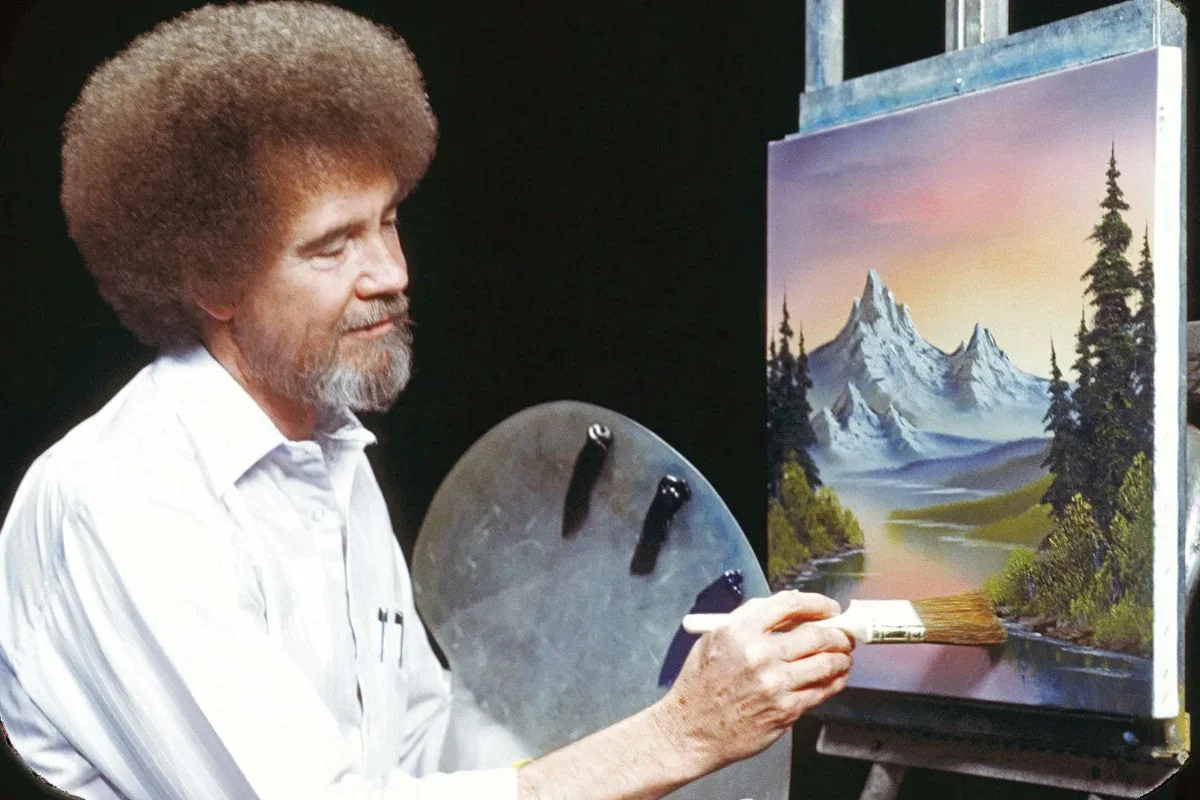
Whether it’s a click on the wrong link, a friend dragging you to a terrible slasher film, or a book you had no desire to read and would have never purchased, a lot of discovery begins with poor targeting and chance.
The old internet was full of this because it was absolutely terrible at knowing what to put in front of your peepers. You searched for one thing and found another. There was no grand, hidden intelligence financially incentivized to steer you there.
You had simply gotten lost.
Recommendation systems are designed to make that happen less often. They reduce the distance between you and the thing you're statistically likely to enjoy.
The trouble with that is that the wrong thing occasionally turns out to be the right thing. And the more accurately our environments anticipate us, the harder genuine surprise becomes to manufacture.
And these apps and algorithms are learning to mimic the element of surprise too. Spotify or TikTok can throw you a curveball song at any moment, or inject some novelty into your feed that doesn’t quite fit your normal appetite.
But there is something uncanny about artificial surprise selected because a machine has calculated that you are likely to appreciate being surprised by it.
At some point, serendipity becomes just another category of personalization.
In any case, maybe freedom is not only about having access to everything we want. Part of that same freedom is being exposed, occasionally and without any sort of permission, to things we would never have dreamed of seeking out in the first place.
The Mirror Problem
Personalization in algorithms depends on a model of you.
At first, that model was pretty crude. Your age. Your location. What items you put in your digital shopping cart. The videos you watched or the websites you visited. Maybe whether you seemed like the sort of person who might click on an ad for running shoes.
Well, it’s downright astounding how good those models are getting these days.
They have begun to learn what holds your attention, what you skip, what you replay, what you hovered your mouse over for a sliver of an instance, what made you angry enough to push back on an ignorant and anonymous internet comment, or what made you curious enough to stay. Taste, mood, hesitation, timing, and context all got transmuted into digital gold.
After a while, the algorithm stops simply observing your preferences and begins building a theory of who you are, what motivates you, and who you might become.
This is where things get a bit freaky.
If the machine speculates that you may or may not like a certain kind of music, like Swedish Viking Death Polka, it shows you more of it. You tune in and listen out of curiosity. That, in turn, confirms the model.
If it thinks you care about a particular political issue, you see more of that too. This can be really dangerous.
You engage, perhaps because it is now constantly in front of you, and the system becomes even more confident that this is simply who you are to your very core.
The prediction helps create the evidence that validates the prediction, like a seemingly innocuous feedback loop.
Nobody needs to lock you inside an ideological chamber or secretly reprogram your personality into amplifying misogynistic content. Social media does a fine enough job of allowing this to happen all on its own.
The environment merely becomes a little more responsive to the person it already believes you to be. Over time, that can become a very comfortable sort of trap.
We usually imagine identity as something internal, something we discover or concoct within ourselves. But increasingly, we careen through digital environments that are continuously reflecting a version of us back at us, which can be a bit jarring.
You liked this. You watched that. People like you also enjoy such and such...
This is who we assume you are. The mirror gets a bit more polished and a bit clearer.
At some point, personalization starts to raise a question that has very little to do with convenience. How easy is it to become someone new when the world around you keeps introducing you to your previous self?
And this is where AI matters, although probably not for the reason we usually discuss here.
Recommendation systems build models of what we might want to watch, read, or buy.
AI gives those models a much larger role: A system that knows your preferences, calendar, writing style, habits, and history no longer needs to merely recommend something. It can begin acting on that prediction too.
The better it understands you, the less often it needs to ask you first, which, to be fair, sounds pretty convenient.
The Right to Be Misunderstood
But perhaps being asked was doing something more important than we gave it credit for.
Every time a machine asks what you want, you are forced to make some tiny declaration about yourself.
You choose >>> You change your mind >>> You ignore the recommendation >>> You click on something stupid for no reason >>> You contradict the person you were 24 hours ago.
The unsettling version of personalization gets you right so consistently that it becomes damn near impossible to surprise it in any meaningful way.
We have spent years talking about privacy mostly in terms of who knows things about us. Who has our data, who can see our searches, who knows what we've bought.
I'm becoming more interested in a stranger question: who gets to decide what all those things mean?
If I spend three weeks watching videos about restoring old sailboats, that hardly means that I’ve up and become a “sailboat person” all of a sudden.
Maybe I read twenty articles from a rotten political ideology I despise because I am utterly and morbidly fascinated by it.
Maybe I listen to Elliott Smith for four consecutive hours because it is raining outside and apparently I have decided happiness is completely overrated and I needed a good cry.
Maybe at two in the morning I become briefly obsessed with Mongolian throat singing or one of those stunning, folksy Chinese craft channels where they create teapots from scratch.
Well, none of these things need to become permanent additions to some invisible computational biography. Human beings should be allowed to generate false positives that don’t neatly fit an algorithm.
We should be allowed to contradict ourselves or abandon an interest. We can temporarily become fascinated by idiotic, nonsensical things, tweak our political philosophies, develop new musical tastes or revert to old ones. Basically, we deserve to make no statistical sense whatsoever whenever we please.
We may do things because we are bored or tired or hungry or drunk. Maybe there’s no reason at all. That messiness is part of what makes people change, not noise that needs to be cleaned up and sterilized.
If every curiosity becomes a signal, every detour evidence, and every past behavior another clue used to predict the very next one, then at some point we risk turning exploration into declaration.
You looked at this >>> therefore you are this.
You enjoyed that >>> therefore you will enjoy more of that.
You behaved this way before >>> therefore here is the future version of you we have prepared for you in advance. You’re very welcome.
There is something suffocatingly gloomy and claustrophobic in that.
Maybe one of the luxuries we will eventually learn to value is the ability to remain partially illegible.
The right to contradict our own data. The right to confuse the algorithm. The right to wake up tomorrow and go down a rabbit hole nobody could have possibly predicted.
The right to be misunderstood, at least occasionally.
Twenty years ago this would have sounded like an absolutely absurd thing to ask for. Programmatic inconvenience. Computers were already doing a fine enough job of misunderstanding us.
Too Stupid to Know Us
Which brings me back to that Myspace announcement.
A Myspace profile was most likely a terrible representation of who you actually were.
The awful songs. Blurry photographs. Badly cropped backgrounds. Quotes from films your younger self only half understood. Then the political machinations of a friend list ranked in an order capable of causing serious diplomatic consequences at school the next morning.
It was theatrical, cringeworthy, inconsistent, and almost certainly inaccurate.
But the important thing was that you had made it inaccurate yourself.
You could wake up one morning, decide the old version of you was deeply humiliating, change the song, delete half the photographs, rewrite your profile, rearrange your Top 8 friends, and emerge several hours later as an entirely different moron flailing around trying to find your identity in the world.
Myspace never objected. It didn't subtly remind you that historical behavioral data suggested the old you was statistically more authentic either.
It never maintained some deeper model underneath the surface, insisting that, based on fourteen months of listening history and browsing behavior, you were still fundamentally a Fall Out Boy fanatic.
It simply took your word for it. You told the internet who you were. It listened and believed you.
Maybe it’s more accurate to say that it just wasn’t sophisticated enough to argue back, which gave you a peculiar sense of freedom.
The modern internet is essentially better in almost every measurable way. It’s glaringly obvious how much faster and smarter and more organized it is. It’s now safer in many respects, as well as more useful and much more powerful. Oh, and infinitely more capable of finding the exact thing you need in millimicroseconds.
I still wouldn't trade the modern internet for dial-up and glitter backgrounds. No chance. I do not want malware hiding inside MP3 files again. I do not want to print out thousands of pages of MapQuest driving directions for road trips.
I am vaguely sure I don’t even want or need Myspace back.
That glorious comeback could be brilliant. Or it could be another bloated, stinky internet corpse briefly shocked back to life Frankenstein-style by a concoction of nostalgia, investors, and people my age suddenly deciding that 2006 was a golden era because our knees, necks, and backs didn’t hurt so badly yet.
But reading about the possible return of Myspace did remind me of something I had not realized we lost.
The internet once allowed us to tell it, and the people who found us there, who we were on that particular day. Now it increasingly tries to tell us who we are, and predict who we might become.
Maybe what I miss most about the worse internet is not the ugliness, the broken links, the terrible songs, or the wooden, rickety, death-trap roller coaster infrastructure keeping the whole thing precariously cobbled together.
Above all else, I suppose I miss the naive, fledgling machines of the World Wide Web that were too underdeveloped and rudimentary. The ones that were too damn stupid to actually know me...